


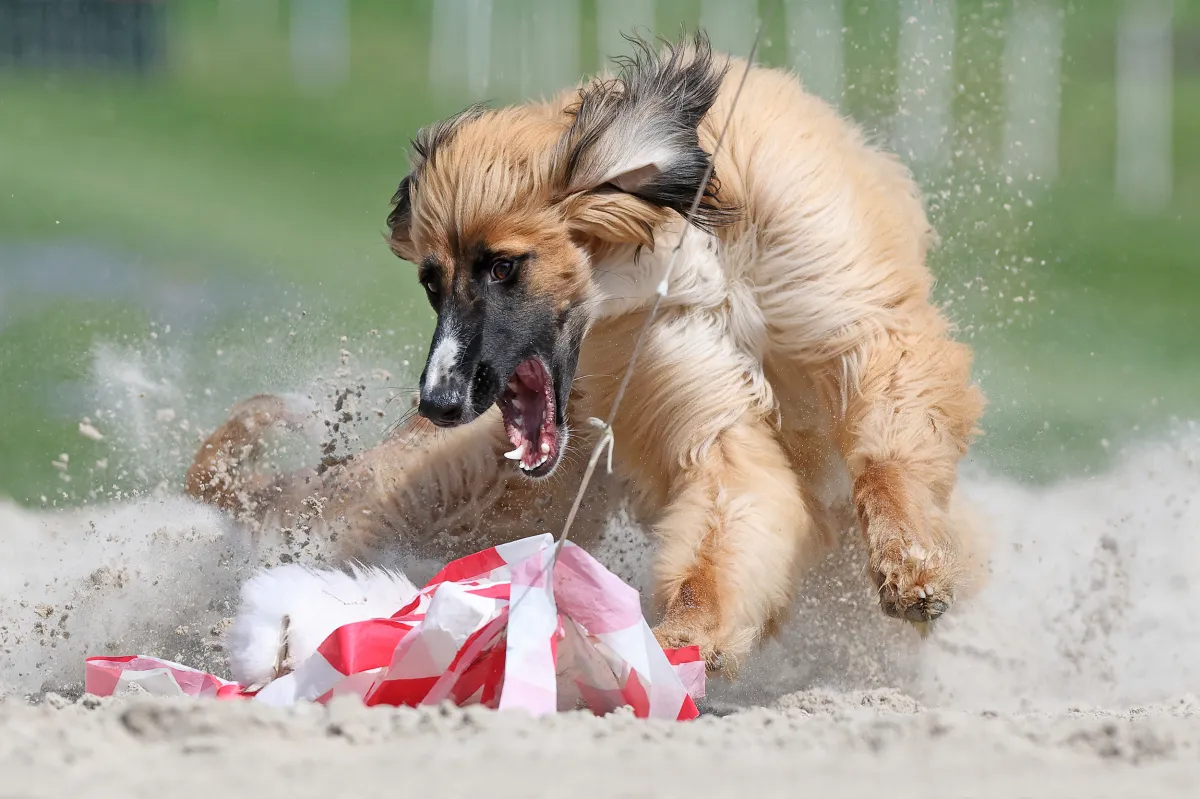
In the Congo Basin, two groups of wild western lowland gorillas encounter photographer Hugo Hebbe. One group is familiar with humans, reacting with indifference to the attention. The other remains cautious, scamping off when humans approach. The images captured during the encounter (seen below) document “an evolving story of fear, patience and trust,” the photographer explains.
The images, part of a series called “Guardians of the Jungle,” were honored at the 2026 Sony World Photography Awards, Professional division.
This young gorilla is named Engonga, meaning ‘joy,’ and at just three months old, he seems to have discovered the human gaze for the very first time. This photograph was taken in Gabon, observing a habituated group. The dominant silverback had accepted the photographer’s group’s presence, allowing him to witness moments of trust, like this quiet and fragile encounter in the heart of the forest.
This series explores two encounters with wild western lowland gorillas in the Congo Basin: the same species, the same forest, but two different realities. The first encounter, in Cameroon, involved tracking a group that was still fearful of humans, making each glimpse a rare, fleeting moment. The second encounter, in Gabon, was with a habituated group that was more tolerant of human presence. These images reflect the fragile, complex relationship slowly forming between humans and one of our closest relatives; an evolving story of fear, patience and trust.
Credit: © Hugo Hebbe, France, Shortlist, Professional Competition, Wildlife & Nature, Sony World Photography Awards 2026
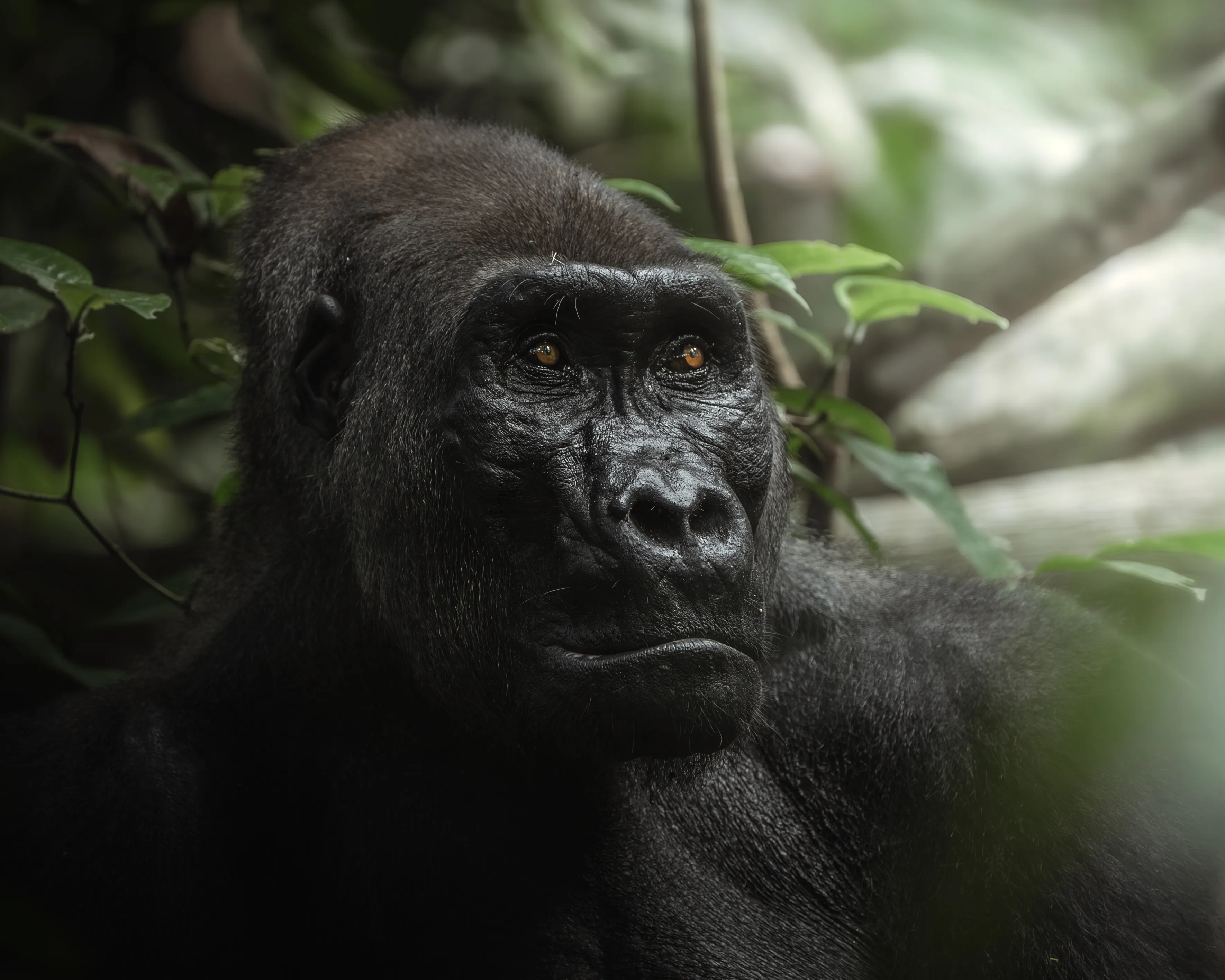
Kamaya sits in full majesty, gazing into the distance in the jungle of Gabon. His massive frame dominates the image, imposing yet composed. Although fully wild, he has grown accustomed to human presence. This portrait captures his grandeur, as if he were surveying the forest he rules with quiet authority.
Credit: © Hugo Hebbe, France, Shortlist, Professional Competition, Wildlife & Nature, Sony World Photography Awards 2026
The prestigious competition announced the finalists and shortlisted photographs this week. More than 430,000 images from over 200 countries and territories were submitted for review this year. The Sony World Photography Awards will announced the Photographer of the Year at a ceremony in London on April 16.
“The finalist and shortlisted work in the Professional competition for the Sony World Photography Awards 2026 demonstrates a remarkable growth in the craft and commitment to photography as a powerful storytelling medium,” Monica Allende, Chair of the Jury, said in a statement. “Across the many series we judged, I was deeply struck by the celebration of the human experience, and of love, kindness, and quiet resilience woven into complex and often challenging realities. Many of the most powerful images focused on intimate moments and small acts of heroism, revealing the enduring strength and spirit found in everyday life.”
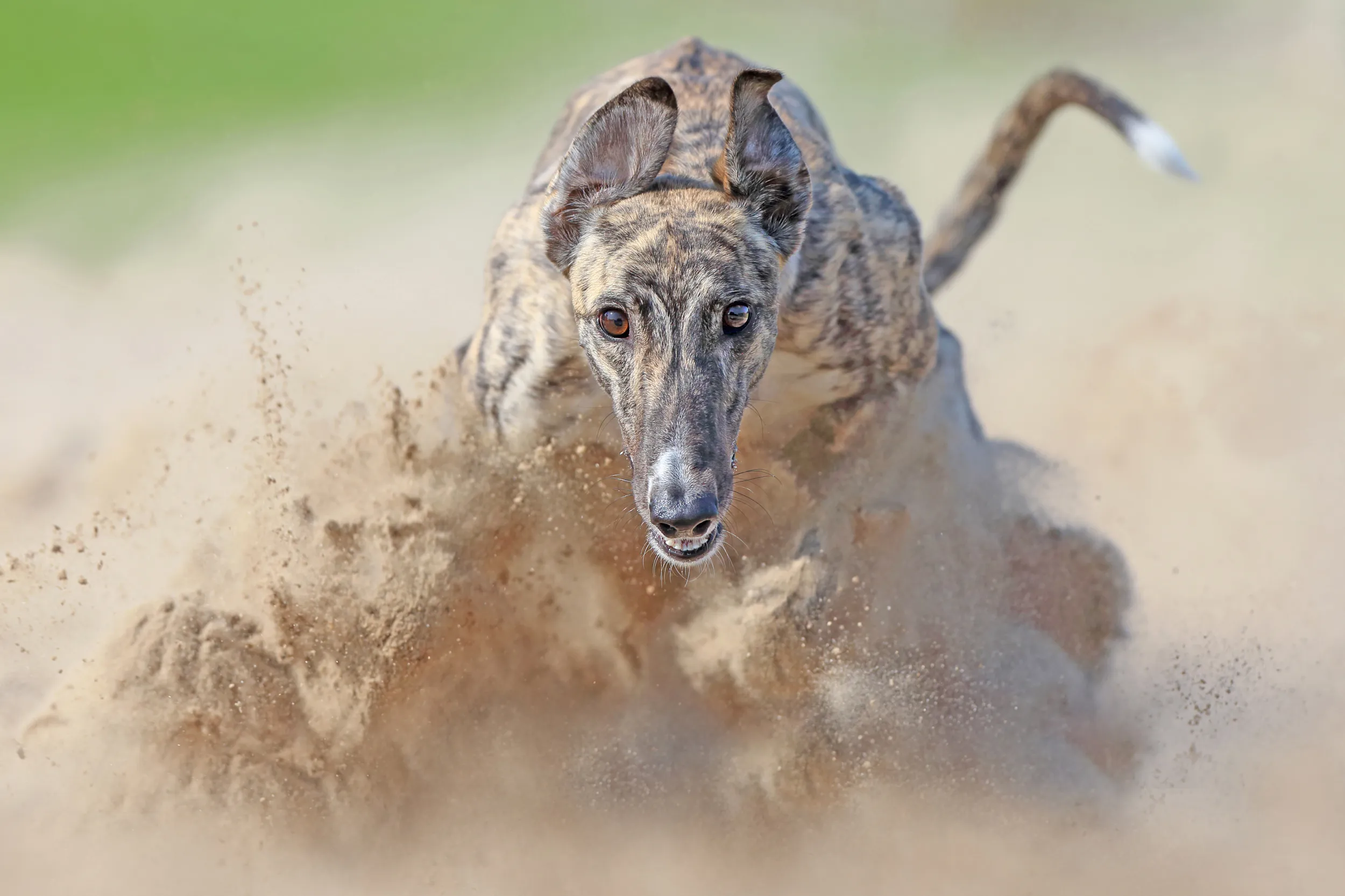
A head-on view of a Greyhound at his best.
For many years the photographer has attended sighthound training sessions. Many of the sighthounds are former racing dogs that have been adopted by private owners and families in order to give them a happy post-racing life. However, even after retirement they are still athletes that need to run and chase on a daily basis. At this private track, an artificial rabbit is pulled by wire along the track, allowing the dogs to run alone or in small groups. At the end of the track there is a soft sandbox where they can grab the fake rabbit — this is the photographer’s favourite moment to photograph these magnificent and gentle creatures.
Credit: © Rob Van Thienen, Belgium, Finalist, Professional Competition, Sport, Sony World Photography Awards 2026 Rob Van Thienen
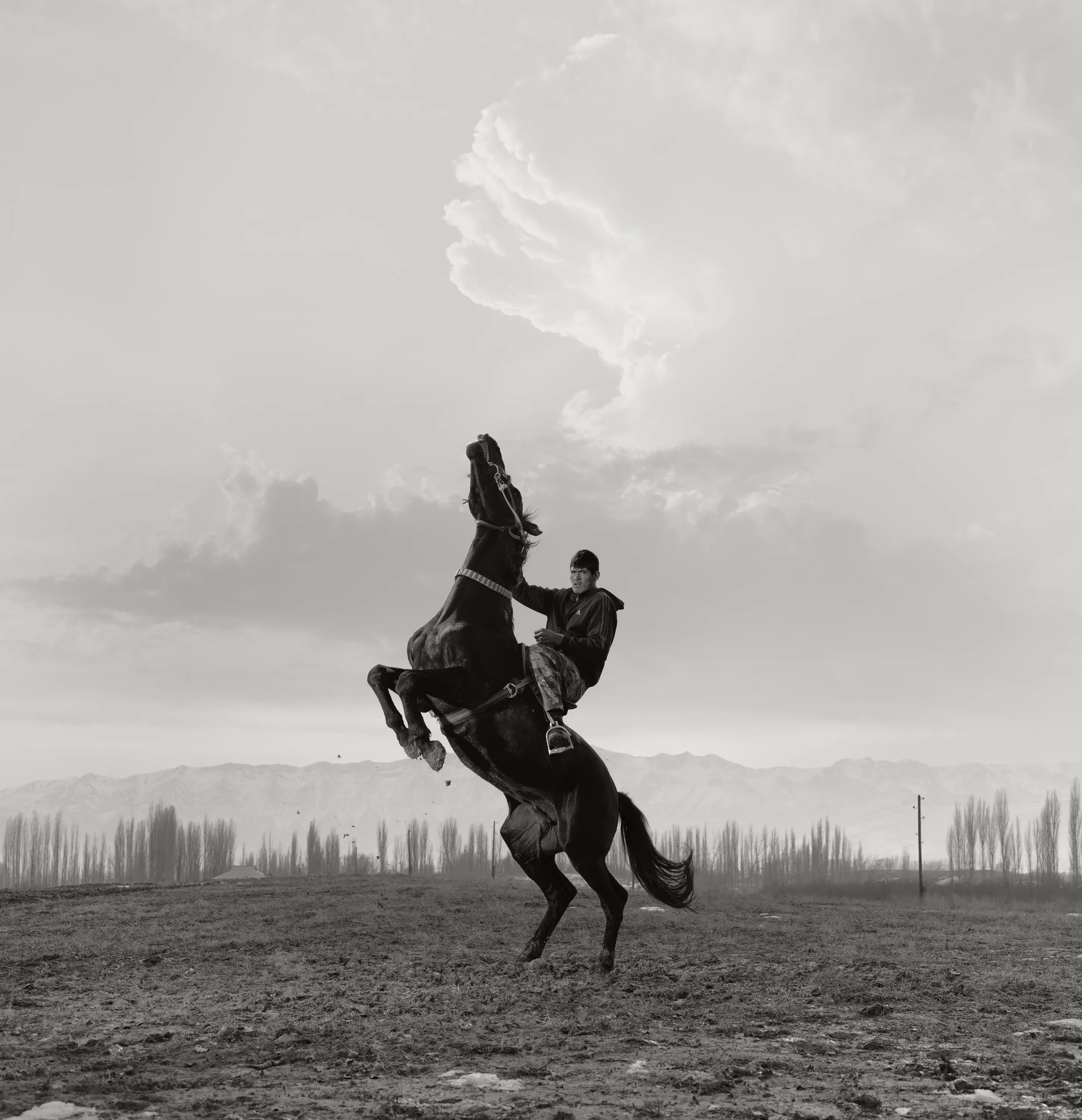
Marengo was the name of Napoleon’s horse, as depicted in the 19th century painting Napoleon Crossing the Alps. Buzkashi matches can be reminiscent of the battle paintings of that period, as a seething morass of fighting players and horses kick up clouds of dust and visceral noise.
Buzkashi (literally meaning ‘goat pulling’ in Persian) is the fierce, ancient sport of Tajikistan. It is similar to polo, but there are no teams and no boundaries. The ball is the eviscerated, headless carcass of a goat and the aim is brutally simple: seize it, hold it, break free. The game was born among the nomadic horse cultures of Central Asia, where strength and horsemanship were measures of identity. For centuries, chapandaz (riders) have hurled themselves into this churning mass of hooves and bodies, fighting for honour and a moment of clear sky among the dust.
Credit: © Todd Antony, New Zealand, Finalist, Professional Competition, Sport, Sony World Photography Awards 2026
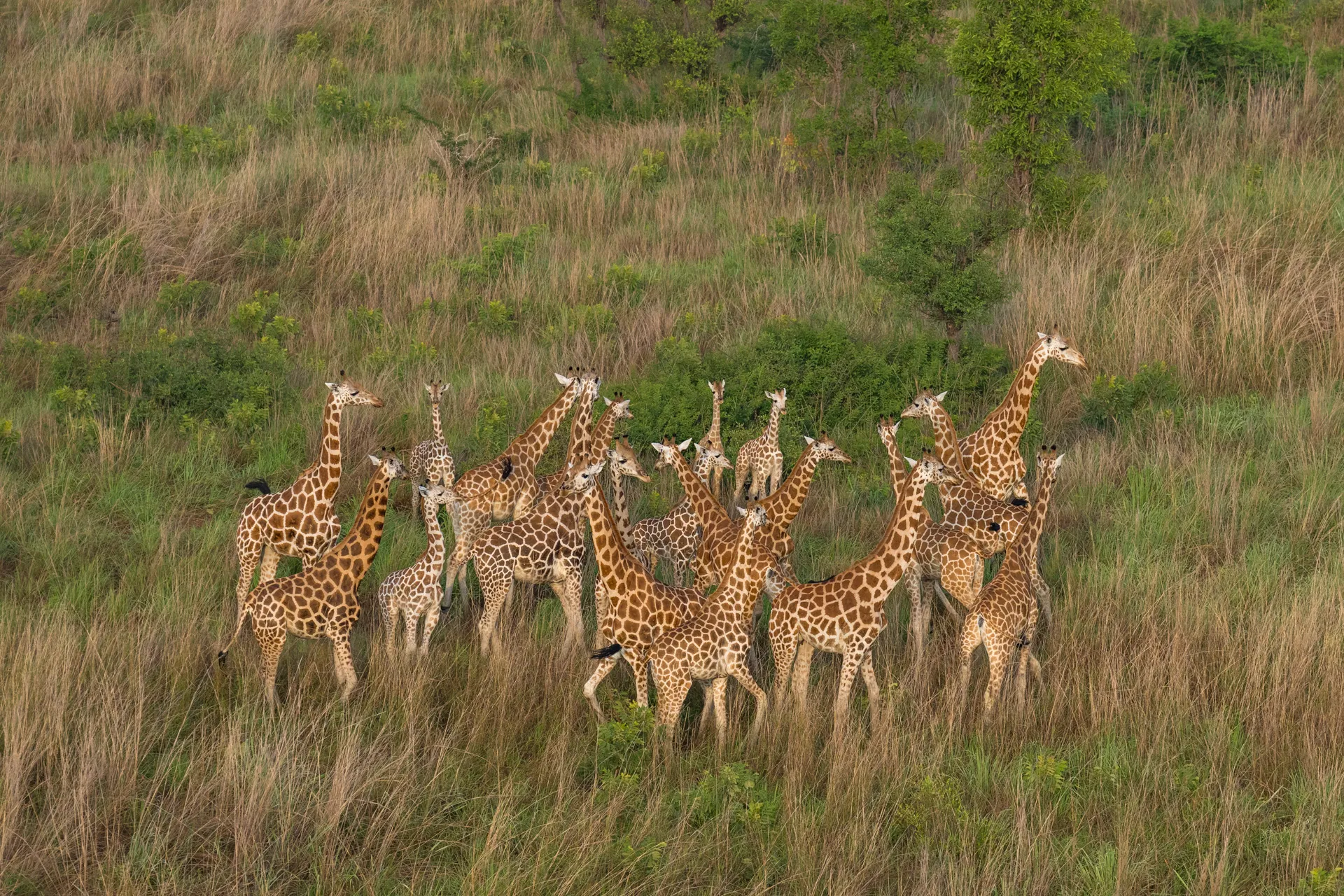
In addition to migratory species, South Sudan is also home to important pockets of non-migratory wildlife. A recent survey identified 405 individual Nubian giraffes (Giraffa camelopardalis camelopardalis), a critically endangered northern giraffe sub-species, in the Boma–Badingilo ecosystem.
Credit: © Marcus Westberg, Sweden, Shortlist, Professional Competition, Wildlife & Nature, Sony World Photography Awards 2026 Marcus Westberg
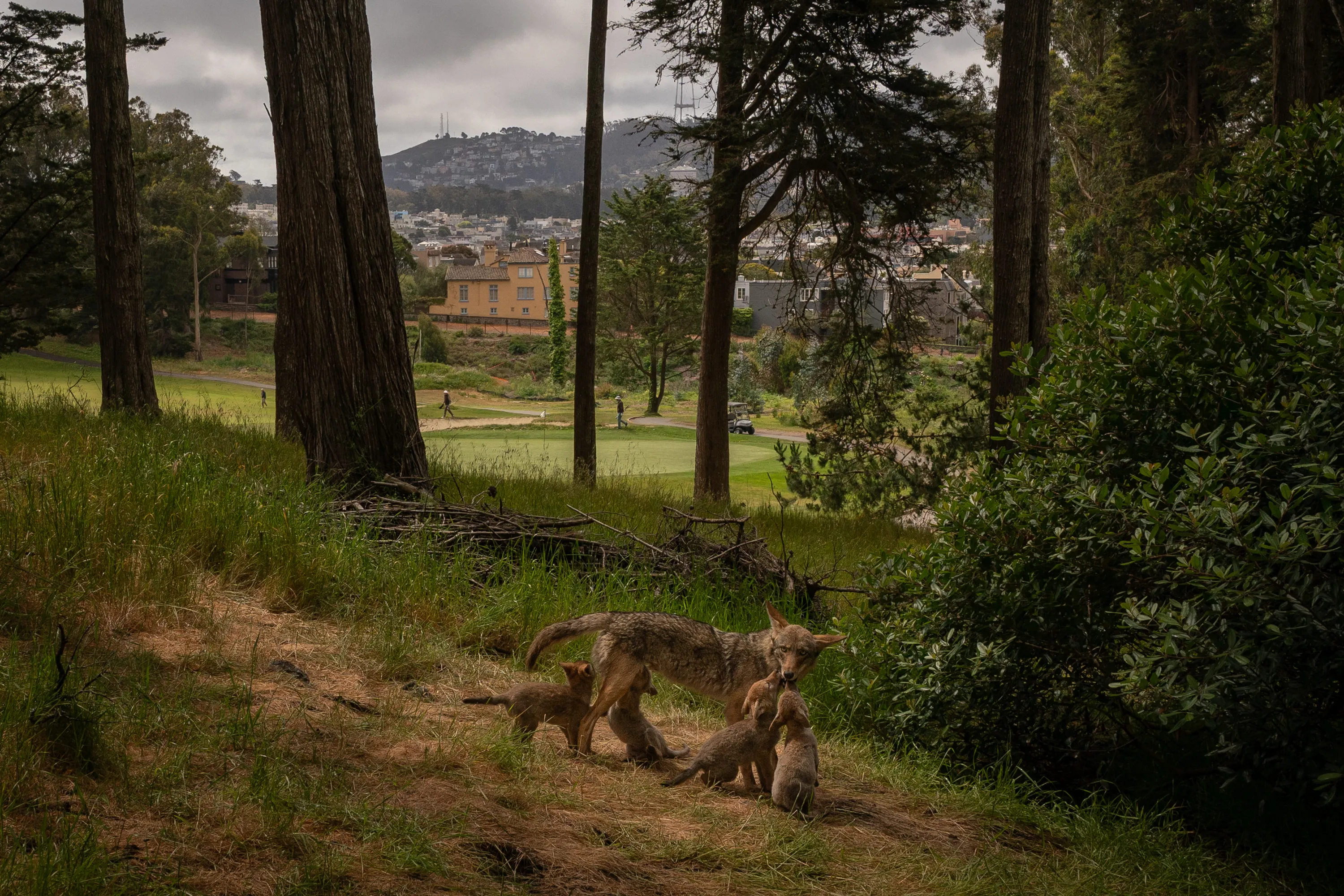
Members of a coyote family, photographed with a remote camera, as the young pups gain confidence and venture further from their den on a San Francisco golf course.
Coyotes were widespread throughout the city of San Francisco in the early 1900s. However, a government-sponsored campaign that encouraged residents to poison or shoot this native species led to them vanishing from the area. More than 75 years passed before they re-emerged in the city in the early 2000s, a testament to their resilience and adaptability. There is now a steady population estimated at around 100 individuals, but co-existence between an apex predator and city-dwelling people is not without its challenges. Generally speaking, though, scientists say it is not the coyotes of San Francisco that are the problem, but humans. Fishermen leave bait on piers, picnickers leave scraps in parks, rubbish bins spill over with detritus that the coyotes relish and some locals break the law and intentionally feed them.
Credit: © Loren Elliott, United States, Shortlist, Professional Competition, Wildlife & Nature, Sony World Photography Awards 2026 Loren Elliott
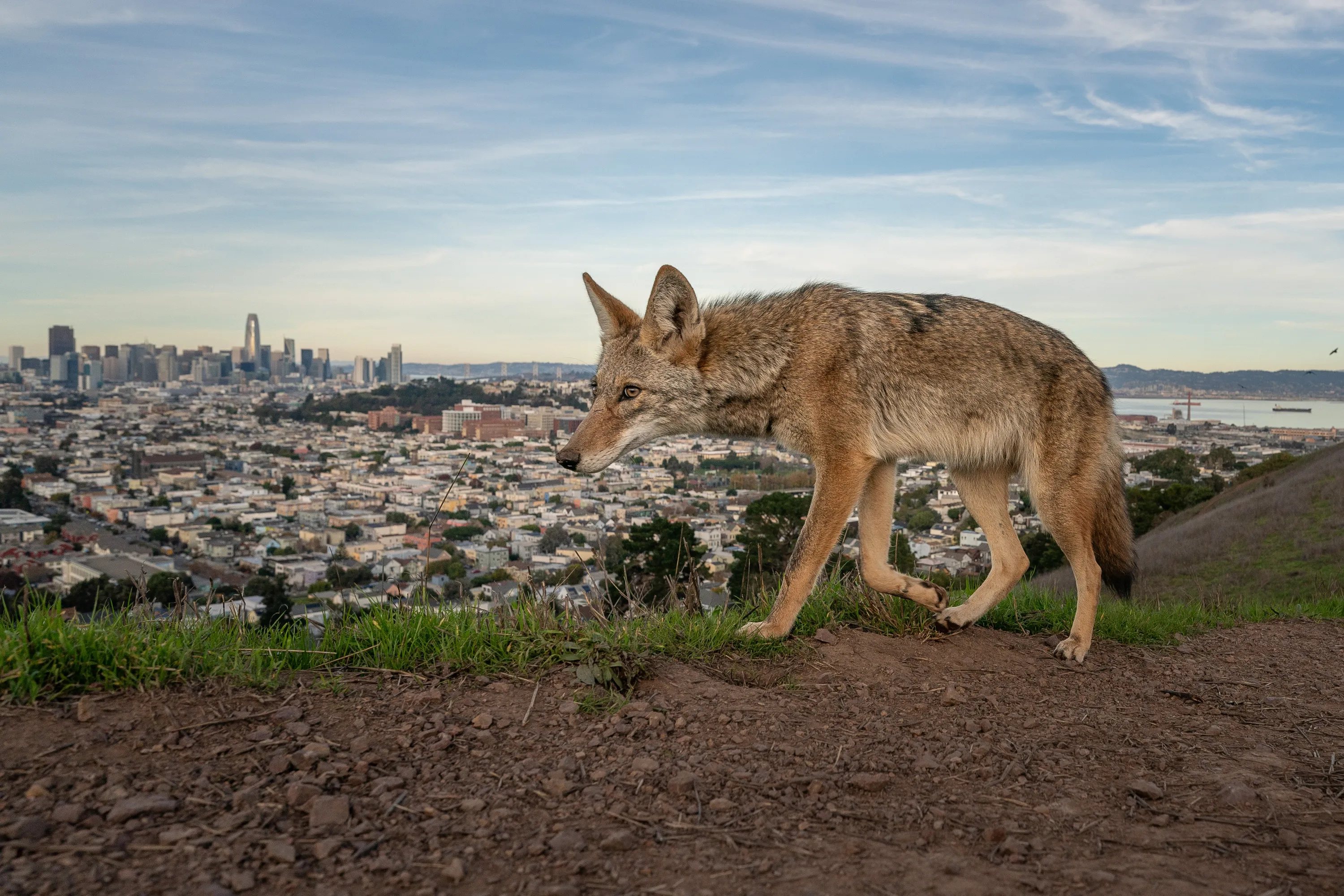
A coyote photographed with a remotely-triggered camera walks in front of the downtown skyline in San Francisco. Although coyotes are native to the area, they were once eradicated from the city limits. After an absence of more than 75 years, they have now started to return.
Credit: © Loren Elliott, United States, Shortlist, Professional Competition, Wildlife & Nature, Sony World Photography Awards 2026 Loren Elliott
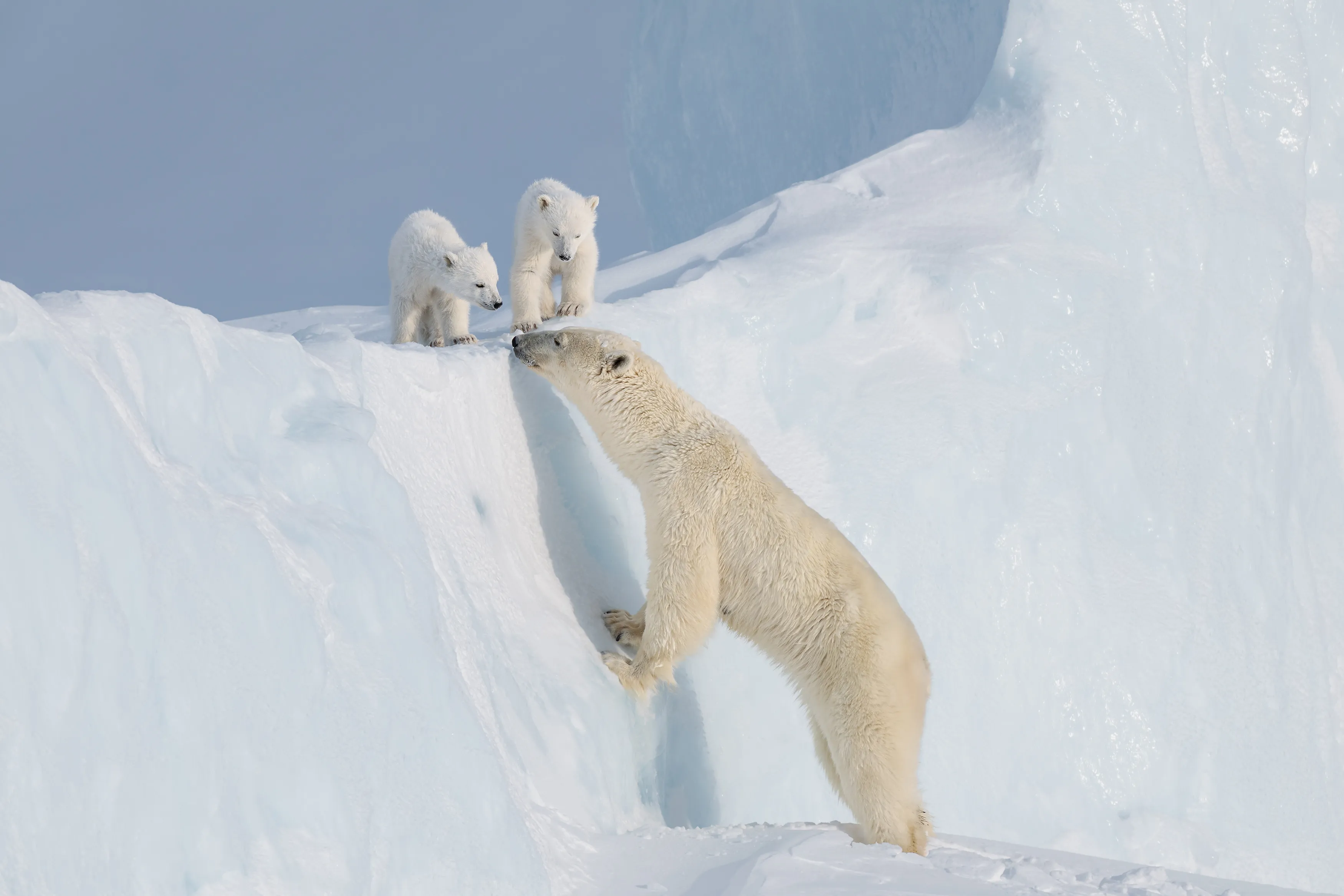
At the crumbling edge of a drifted ridge on Baffin Island’s sea ice, a polar bear mother rises to meet her cub nose-to-nose as it hesitates above the drop. After weeks of watching quietly from a distance, the photographer captured this wordless lesson in courage and trust on a surface that fractures earlier each year.
On the sea ice off Baffin Island, Nunavut, Canada, a polar bear mother leads her newborn cubs from the safety of their snow den onto seasonal ice that grows smaller every year. For close to a month, the photographer worked with Inuit guides, travelling by sled and using long lenses at a respectful distance as the family rested, played, learned to hunt and crossed the fractured floes. Their movements trace a simple story of life on a foundation that is slowly melting away — a quiet choreography of survival.
Credit: © Sunita Mandal, United States, Shortlist, Professional Competition, Wildlife & Nature, Sony World Photography Awards 2026 Sunita Mandal
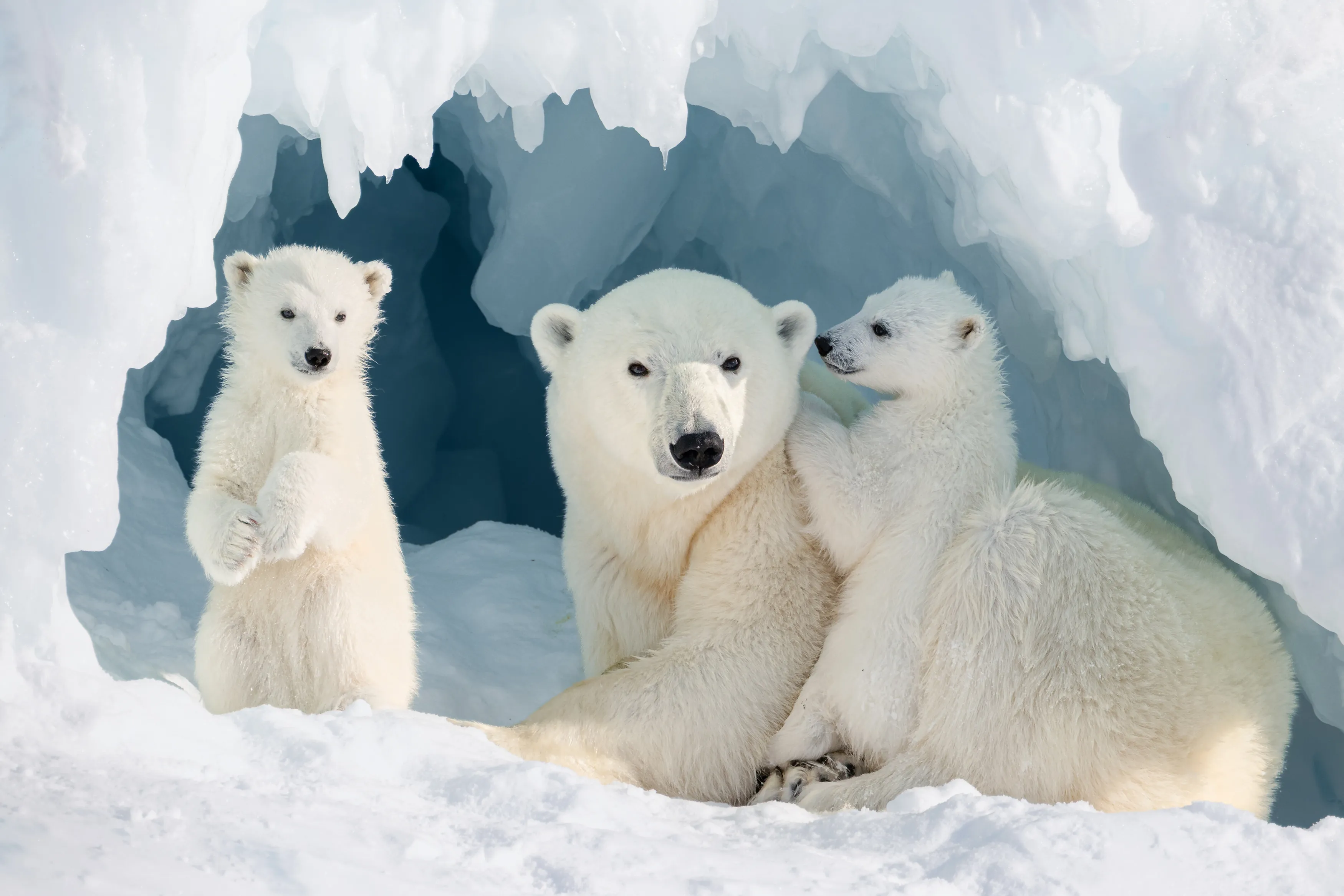
In their first weeks above ground, the cubs rest at the mouth of a wind-carved den, pressed close to their mother. From a distant sled, the photographer waited for the moment the three bodies came together in the shelter.
Credit: © Sunita Mandal, United States, Shortlist, Professional Competition, Wildlife & Nature, Sony World Photography Awards 2026 Sunita Mandal
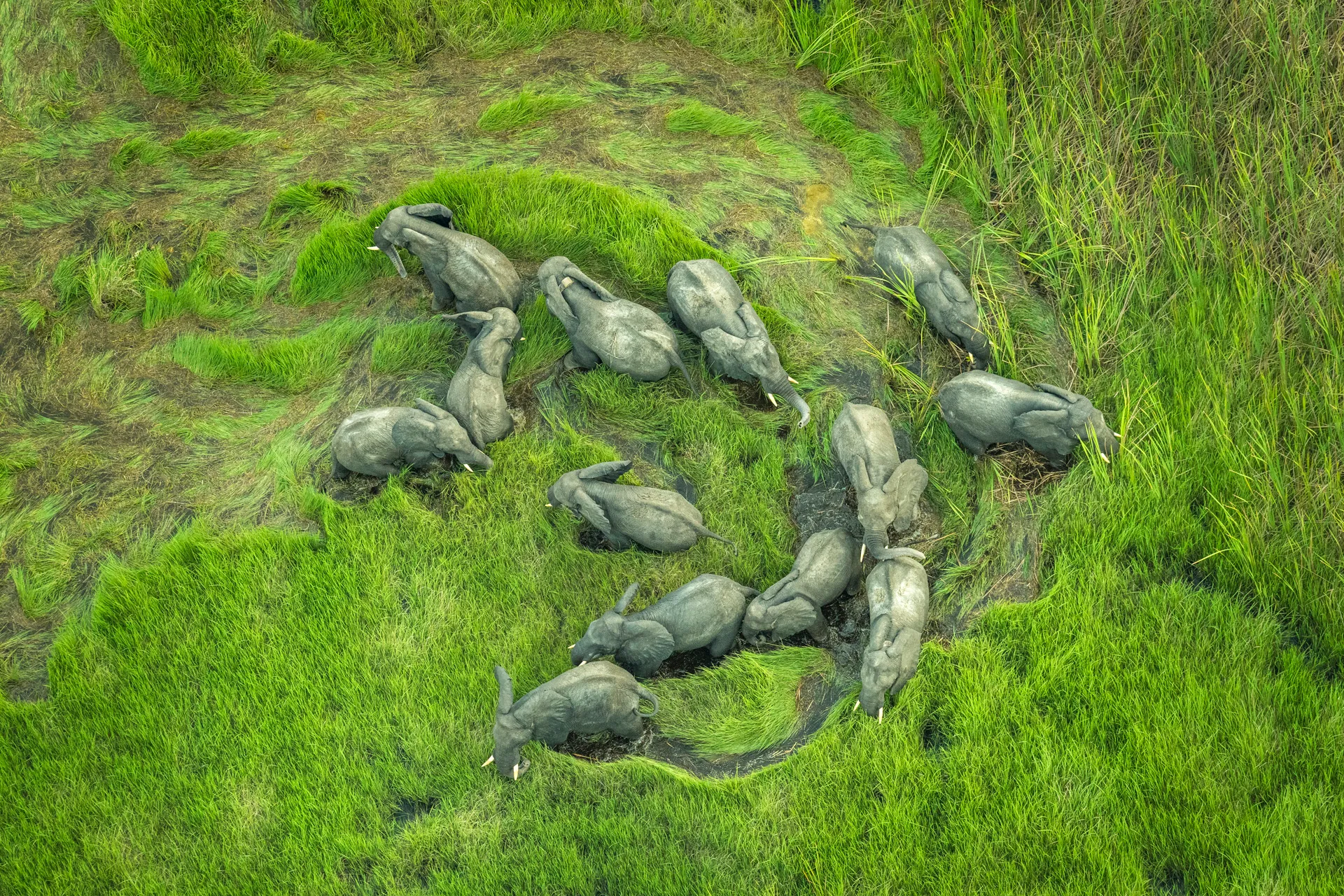
The African savanna elephant (Loxodonta africana) population is a fraction of what it once was — only a few thousand remain, including this herd of 13 individuals in the wetlands of Jonglei State.
South Sudan is the world’s youngest nation state, born out of decades of civil war. It is also home to a 20-million hectare wilderness area, and the world’s largest terrestrial migration: the Great Nile Migration. Each year, up to six-million antelope move across this vast landscape, which is populated primarily by semi-nomadic pastoralists. With no road infrastructure, all of the photographs in this series were taken from the air, either from helicopters, aeroplanes or with a drone.
Credit: © Marcus Westberg, Sweden, Shortlist, Professional Competition, Wildlife & Nature, Sony World Photography Awards 2026 Marcus Westberg
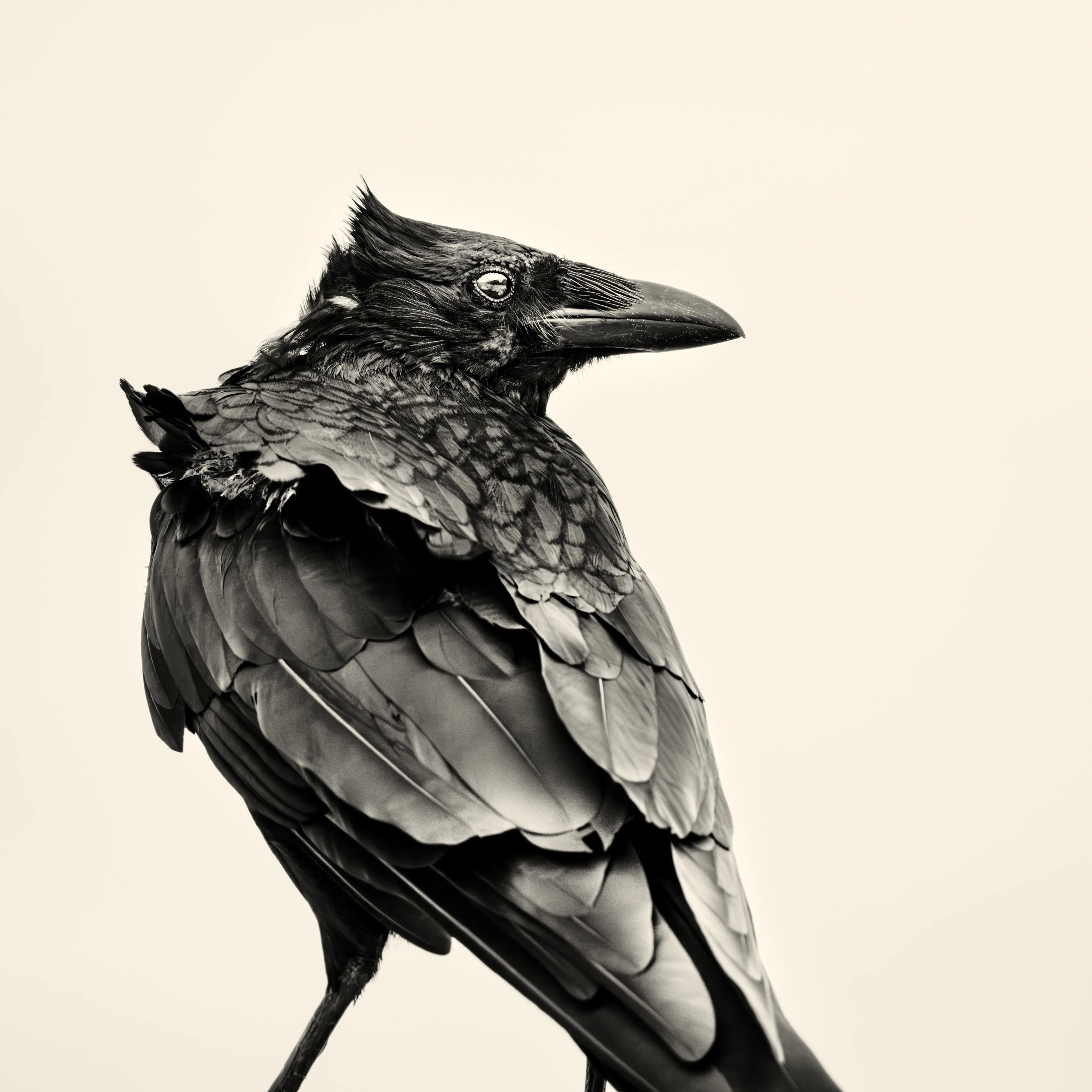
The Crows. North East UK coastline.
Credit: © James Ross, United Kingdom, Shortlist, Professional Competition, Wildlife & Nature, Sony World Photography Awards 2026
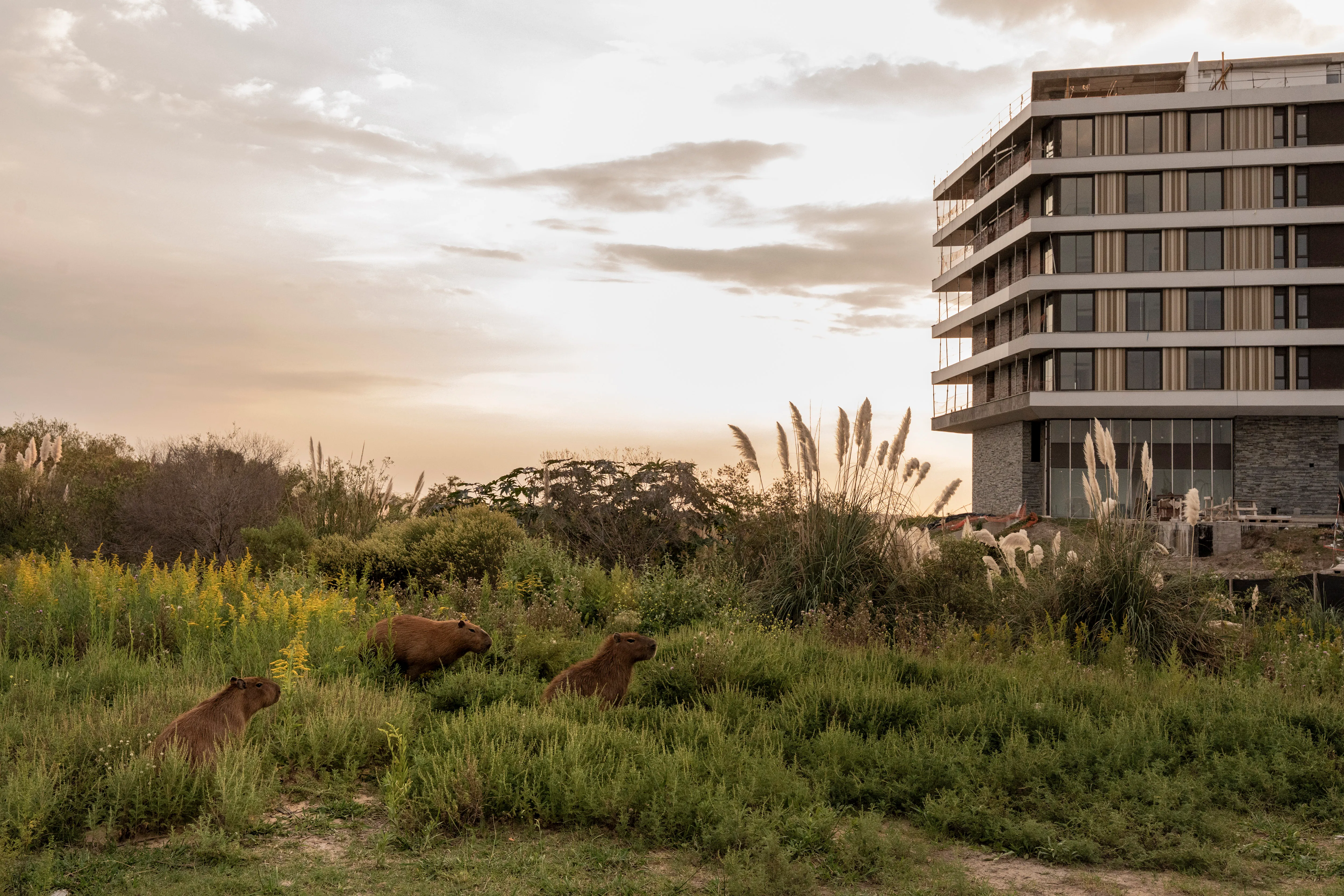
Capybaras are territorial animals that live in groups. This group is grazing close to a construction site in Nordelta, where there is minimal human traffic.
Nordelta is one of the best-known private developments in Buenos Aires, Argentina. It was built on a wetland, an ecosystem in which the land is covered by water, which is the main factor controlling plant and animal life. In recent years, the development’s 45,000 upper-class residents have seen numerous capybaras enter the neighbourhood. Social media has been flooded with videos and photographs of the area’s original inhabitants in swimming pools, crossing the street, or, more tragically, run over or trapped in drains or sewers. In a little over three years, the capybara population tripled to 1,000, leading the Buenos Aires government to approve population control plans that include selective sterilisation and contraception. At the same time, the presence of capybaras has divided the community, with neighbours arguing for and against the capybaras; for the rights of nature and against uncontrolled urban growth on natural land.
Credit: © Anita Pouchard Serra, Argentina, Finalist, Professional Competition, Wildlife & Nature, Sony World Photography Awards 2026 Anita Pouchard Serra
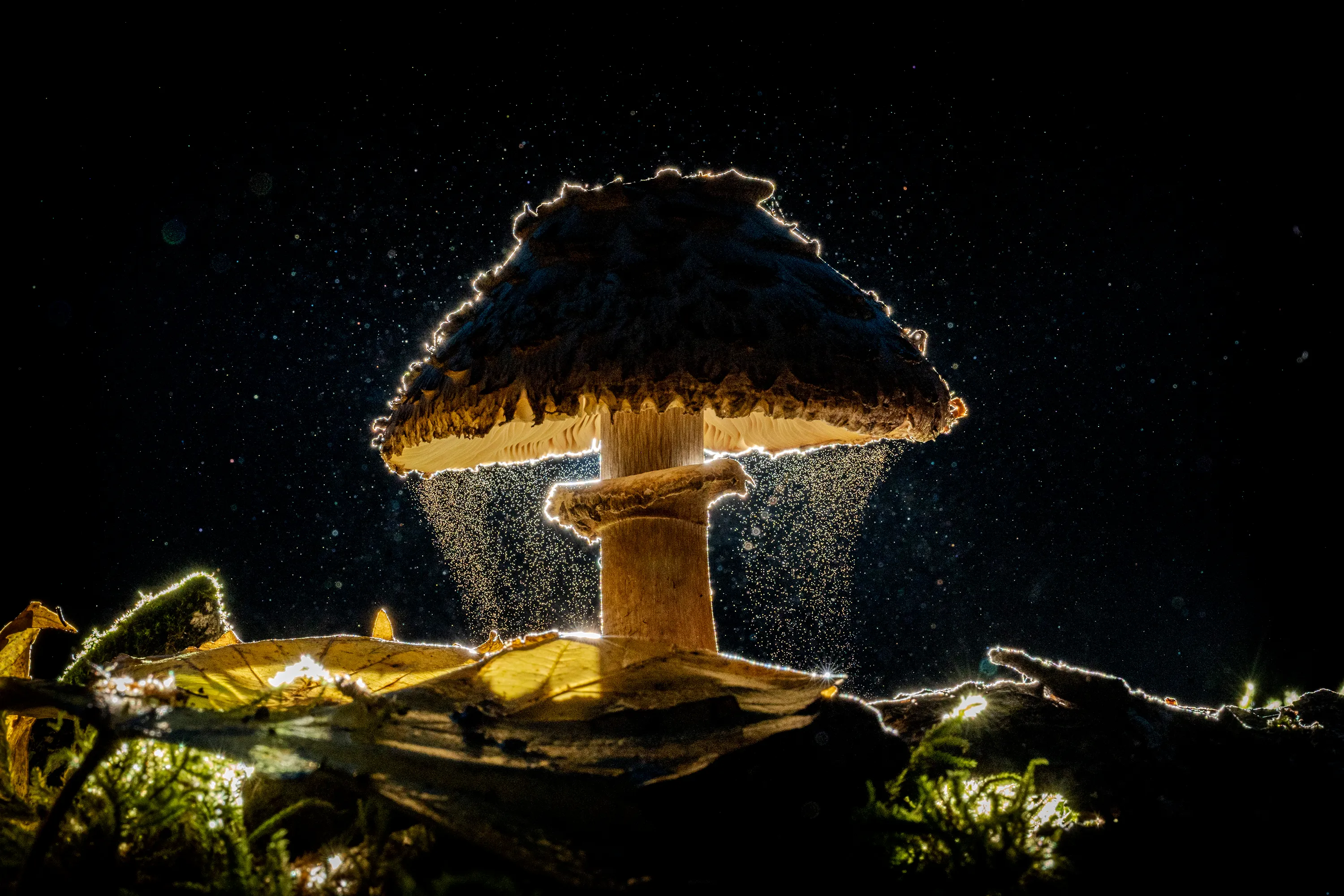
This beautiful shaggy parasol mushroom (Chlorophyllum rhacodes) was found beneath spruce trees, just as its cap was emerging from the soil. The photographer followed its development daily, hoping to photograph its spore release. This image combines a long exposure with six bursts of flash to multiply the visible spore trails in the image.
The sporulation of mushrooms is a subtle and fascinating phenomenon that occurs when they reach maturity. As billions of spores take to the air, a carefully placed backlight reveals shimmering clouds of iridescent swirls. Each spore is wrapped in a droplet of water, creating shimmering colours through light diffraction. The photographer has been working on this subject for more than three years, taking every image in a natural environment, without any intervention on the mushroom itself. Magical, scientific and highly technical, this series reveals mushrooms in a completely different light and shows that even these small living beings are capable of putting on a spectacular show.
Credit: © Benjamin Pawlica, France, Shortlist, Professional Competition, Wildlife & Nature, Sony World Photography Awards 2026 Benjamin PAWLICA
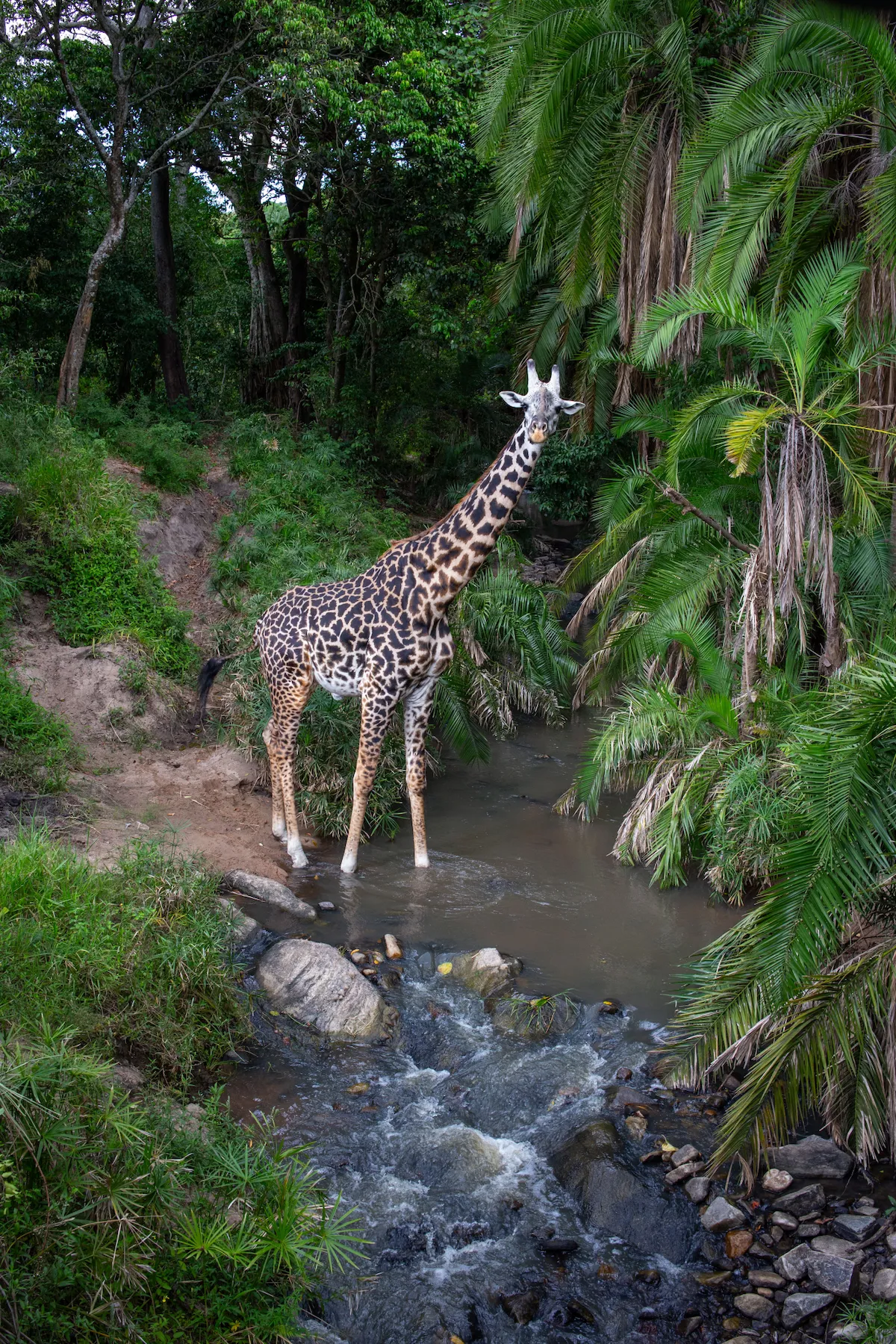
A Maasai giraffe (Giraffa tippelskirchi) navigates the narrow river crossing after dark. Although they are usually associated with open savannah, giraffes also move through enclosed forest corridors, adapting their behaviour to habitats rarely seen by visitors.
This series was produced using a remote camera trap installed at a forested river crossing in Kenya’s Maasai Mara National Reserve. The camera was set up in collaboration with rhino rangers to monitor endangered black rhinoceroses moving through a key corridor and was left running continuously for three months. While its primary purpose was conservation monitoring, the system also allowed nocturnal scenes to be lit creatively, revealing the wildlife and habitat in dramatic ways that are rarely seen. The location was chosen for its striking scenery, enabling the images to document both animal movements and the ecological diversity and beauty of an area largely closed to tourism.
Credit: © Will Burrard-Lucas, United Kingdom, Finalist, Professional Competition, Wildlife & Nature, Sony World Photography Awards 2026
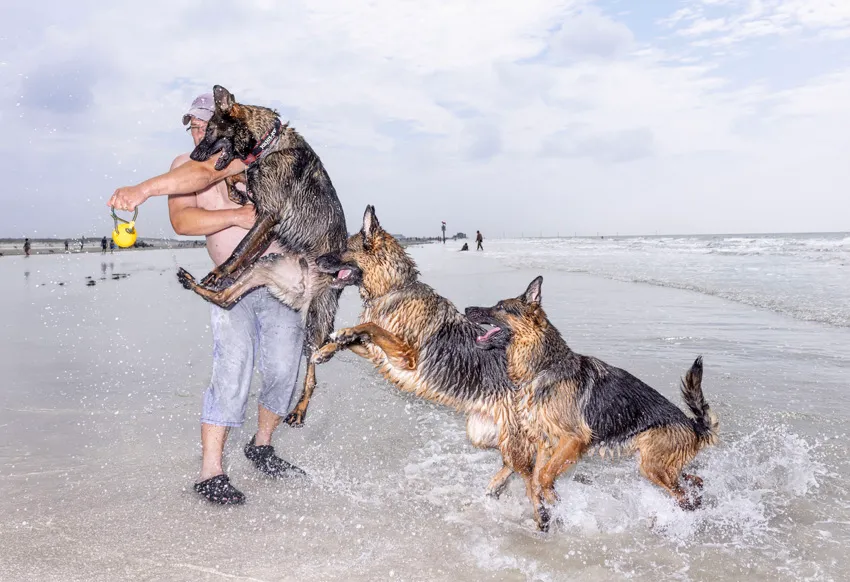
Two German Shepherd dogs and one East German Shepherd dog with their owner, Michael.
Credit: © Hans-Juergen Burkard, Germany, Shortlist, Professional Competition, Portraiture, Sony World Photography Awards 2026 Hans Juergen Burkard
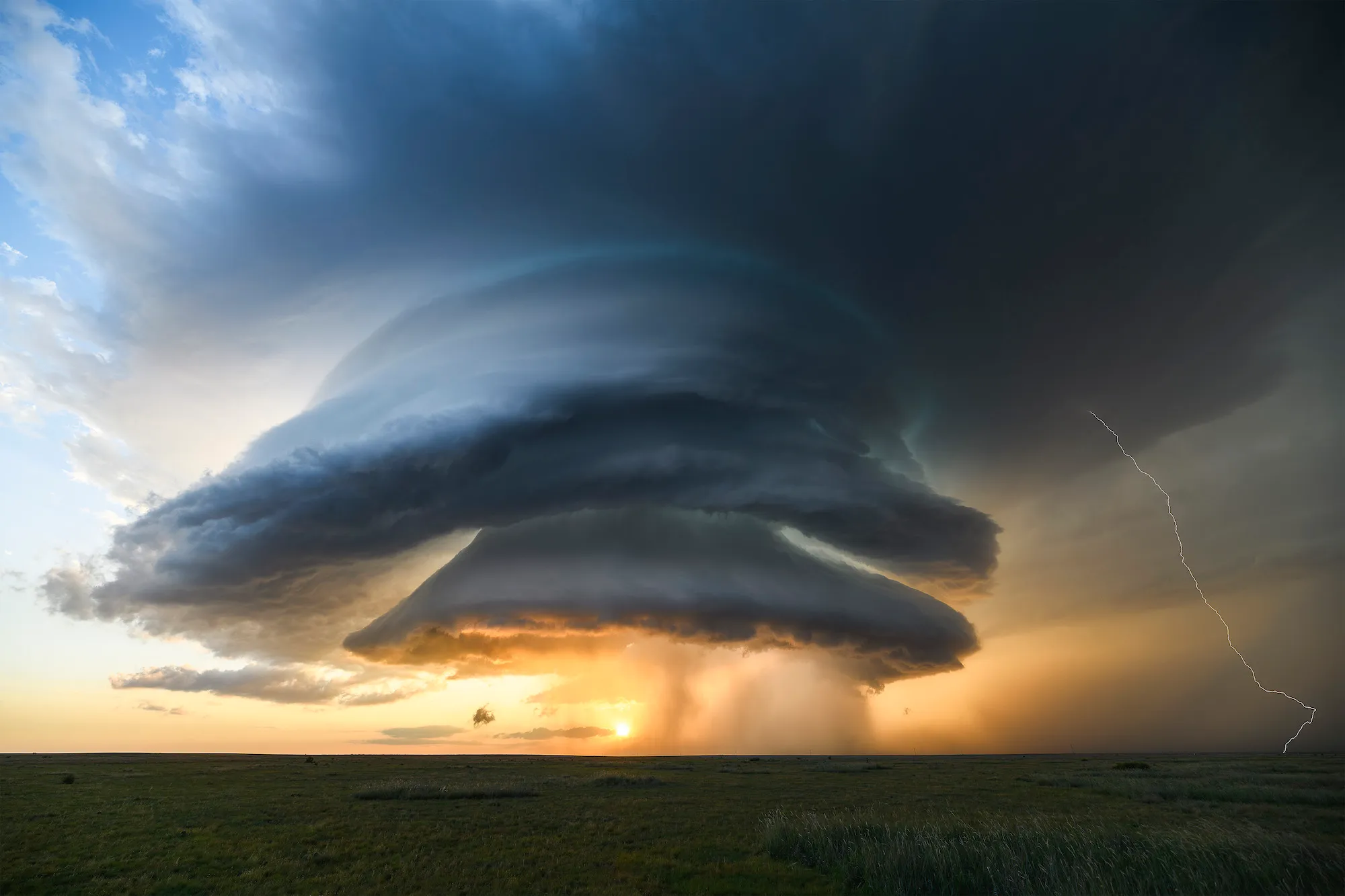
Tornado Alley is situated across the central United States of America and can produce some of the wildest weather on the planet. Supercells traverse Tornado Alley during spring and summer, bringing breathtaking scenes as Mother Nature creates unbelievable atmospheric sculptures. The 2025 season was one of the most intense in memory, as several extremely photogenic storms took place.
Credit: © David Baxter III, United States, Shortlist, Professional Competition, Landscape, Sony World Photography Awards 2026
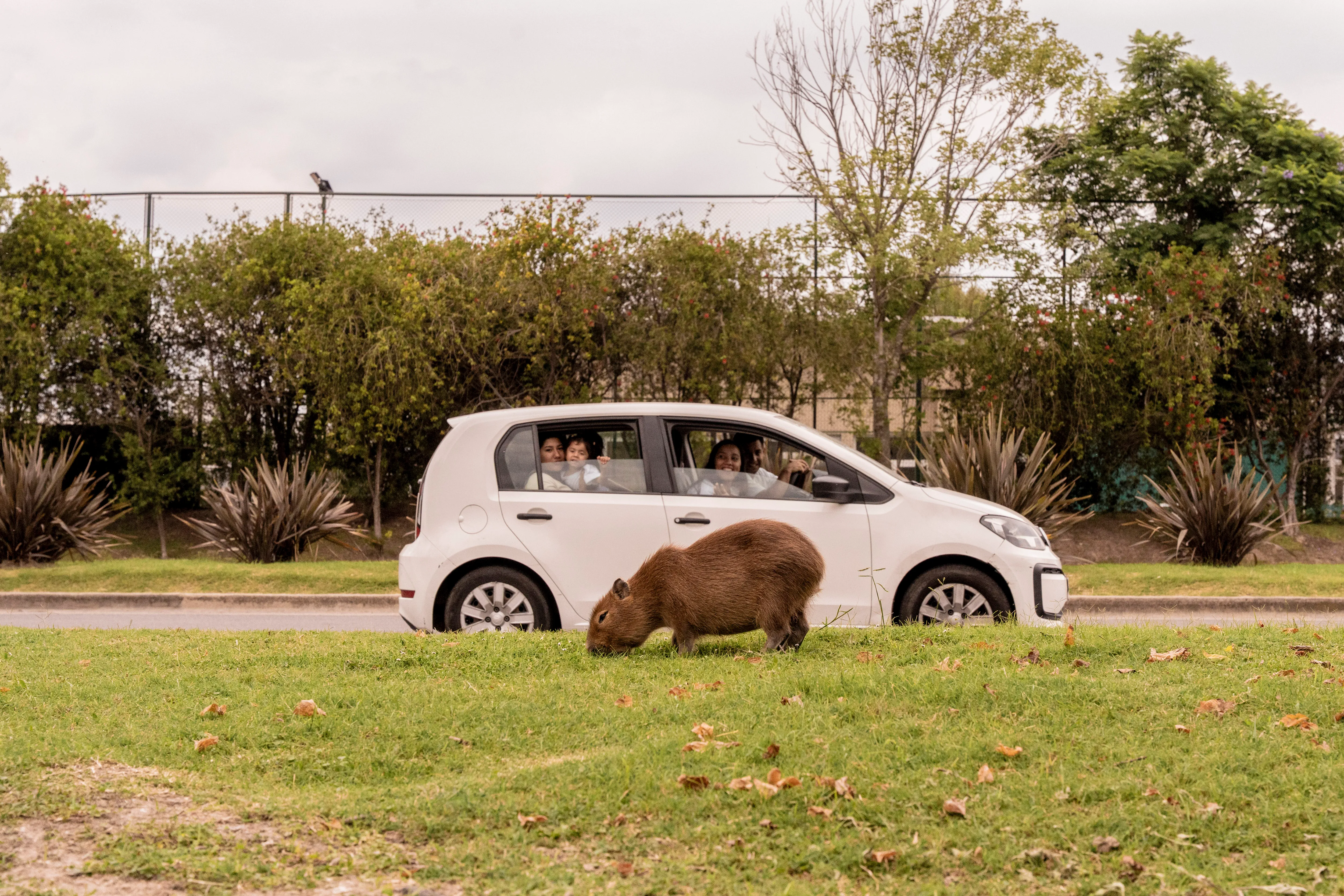
Passengers in a car watch a capybara eating grass by the side of a road running through the private city. The animals attract attention, and many people stop during the day to take photographs of them.
Credit: © Anita Pouchard Serra, Argentina, Finalist, Professional Competition, Wildlife & Nature, Sony World Photography Awards 2026 Anita Pouchard Serra

iCub, Italian Institute of Technology, Genoa, Italy.
There is a technology that will soon be part of our lives, yet most of us know little about it: humanoid robots. These devices are already present in limited contexts, such as museums, where they serve as guides, or factories. Experts, however, are betting that they will soon be prevalent in our homes. This photographic project utilises traditional portrait-photography techniques to highlight their human-like qualities, rather than portraying them as objects, with a solid black background alluding to the mystery surrounding this new technology.
Credit: © Francesco Amorosino, Italy, Shortlist, Professional Competition, Still Life, Sony World Photography Awards 2026 Francesco Amorosino
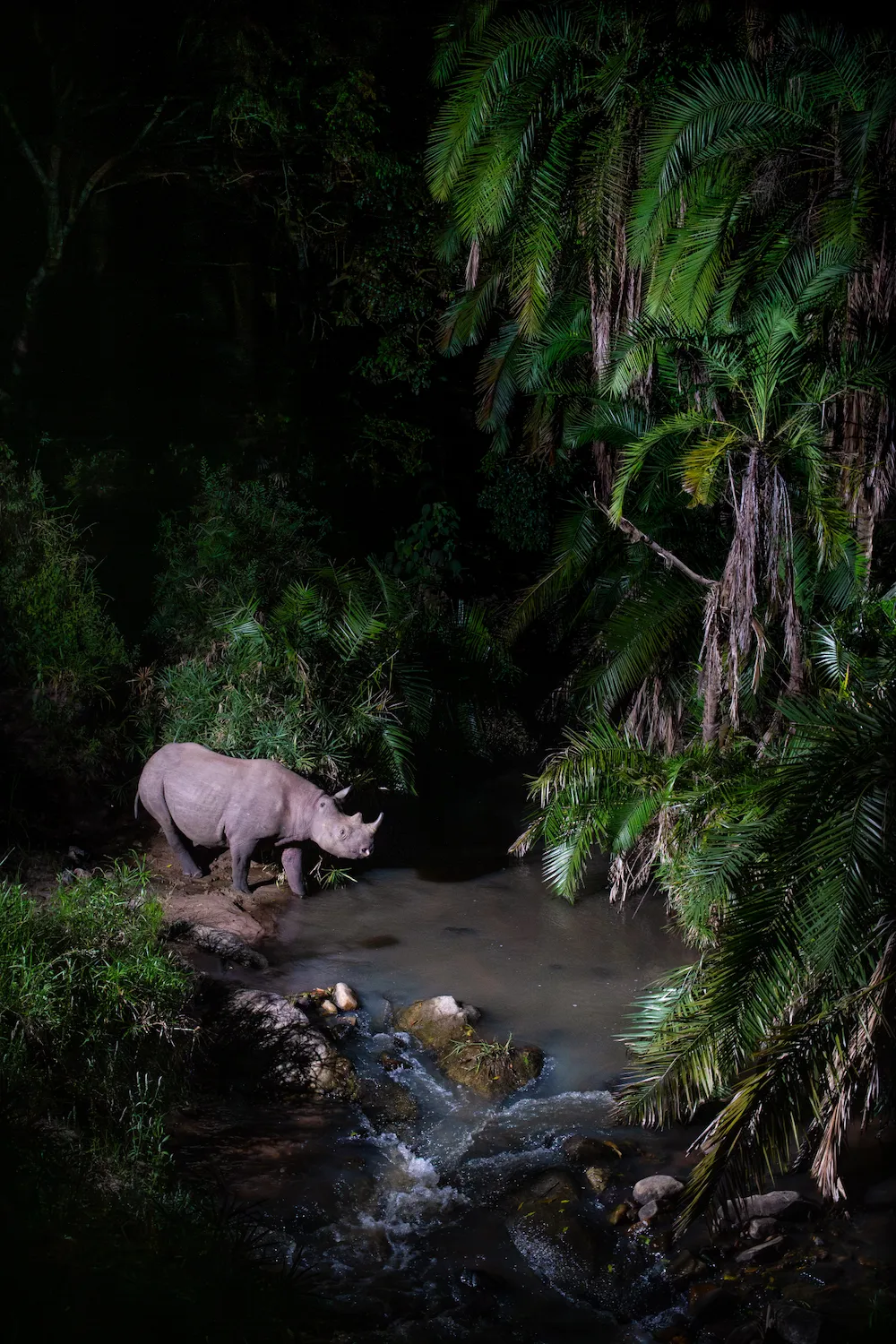
An Eastern black rhinoceros (Diceros bicornis michaeli) moves through a forested river crossing in Kenya’s Maasai Mara National Reserve at night. A remote camera trap was installed here in collaboration with rhino rangers to monitor how individuals use secluded corridors linking feeding areas and water sources.
Credit: © Will Burrard-Lucas, United Kingdom, Finalist, Professional Competition, Wildlife & Nature, Sony World Photography Awards 2026
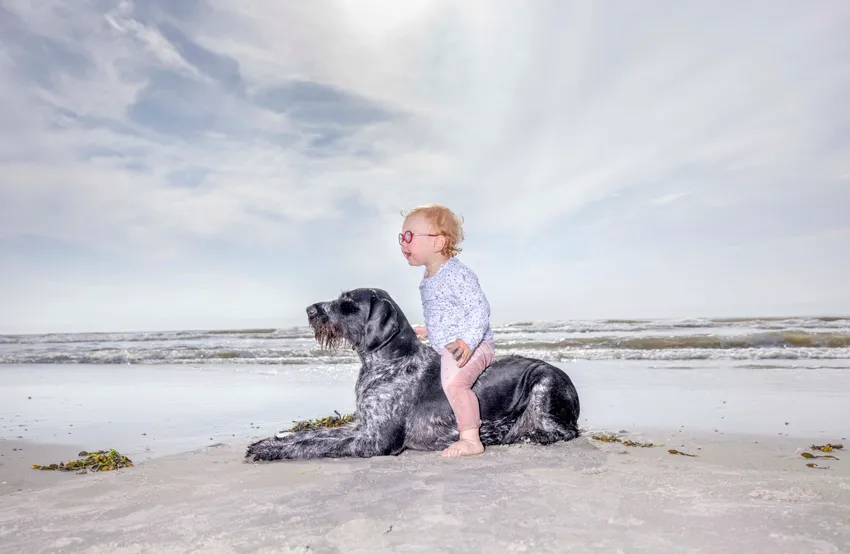
Akira, a German Wirehaired Pointer, with Emmi, the daughter of his owner.
For around 30,000 years, dogs have been closer to mankind than any other animal. For the photographer of this series, it sometimes seemed that it was not humans who tamed dogs, but dogs who domesticated humans — and both became mirrors of the other. Dog Beach consists of portraits of dogs and their humans, taken at the North Sea coast in Germany. To create his portraits, the photographer asked his human subjects to tell him about their ‘love for dogs’ and then photographed them and their often revealing and humorous interactions with their canine companions.
Credit: © Hans-Juergen Burkard, Germany, Shortlist, Professional Competition, Portraiture, Sony World Photography Awards 2026 H.J.Burkard
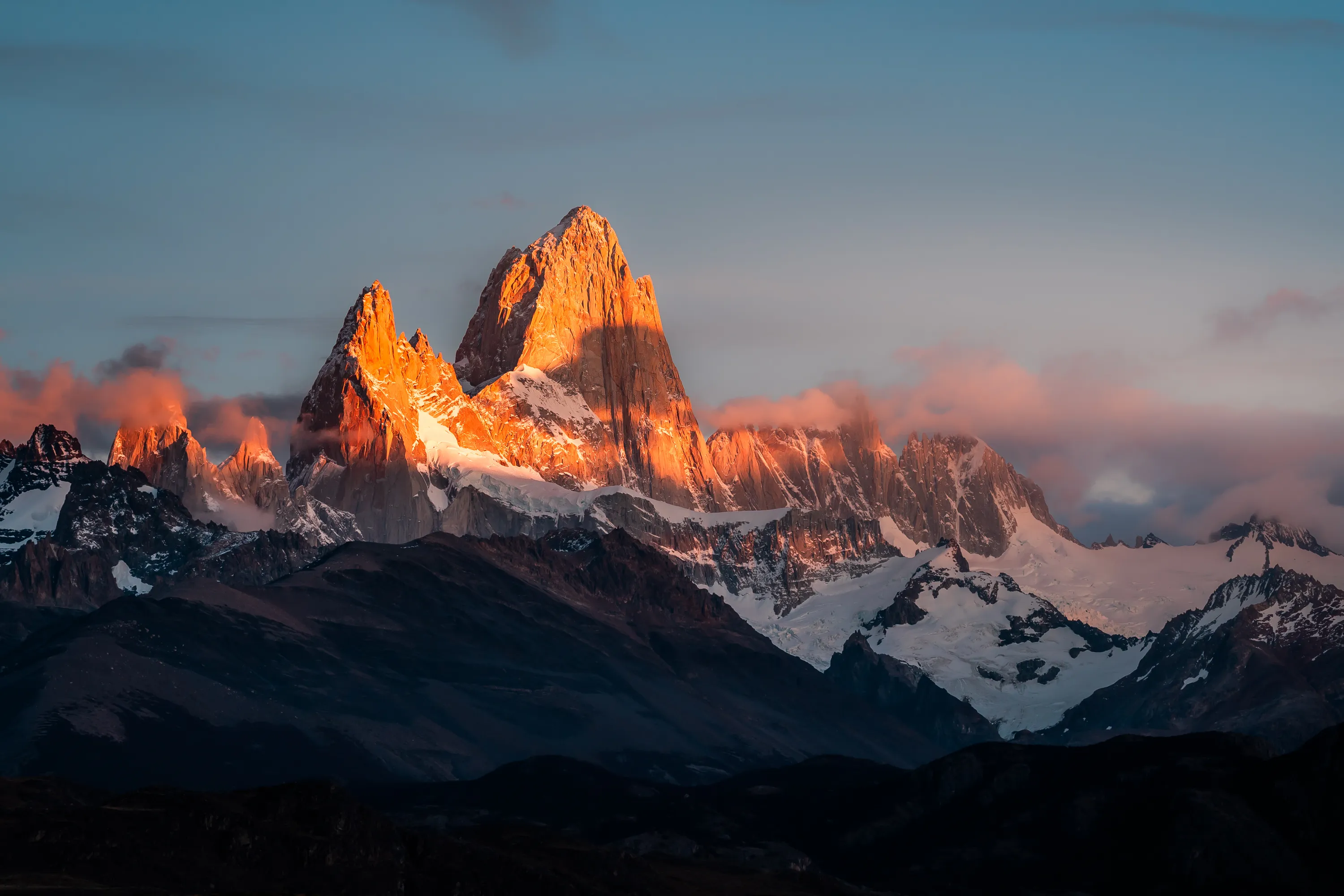
This series is a tribute to the moment when light and earth meet at their most dramatic point. Exploring the Argentine and Chilean Patagonia region during autumn, the photographer sought to capture the last glow of a season that transforms the landscape into a stage of fire and stone. The photographer explains that through these images, the borders between nations disappear, revealing a geographical unity created by the crimson hues of beech trees and the golden light caressing the peaks of the Andes. It is a record of silence, of waiting, and of the beauty of a cycle fading before the arrival of the winter snows.
Credit: © Daniel Clavería, Chile, Shortlist, Professional Competition, Landscape, Sony World Photography Awards 2026 Clavel
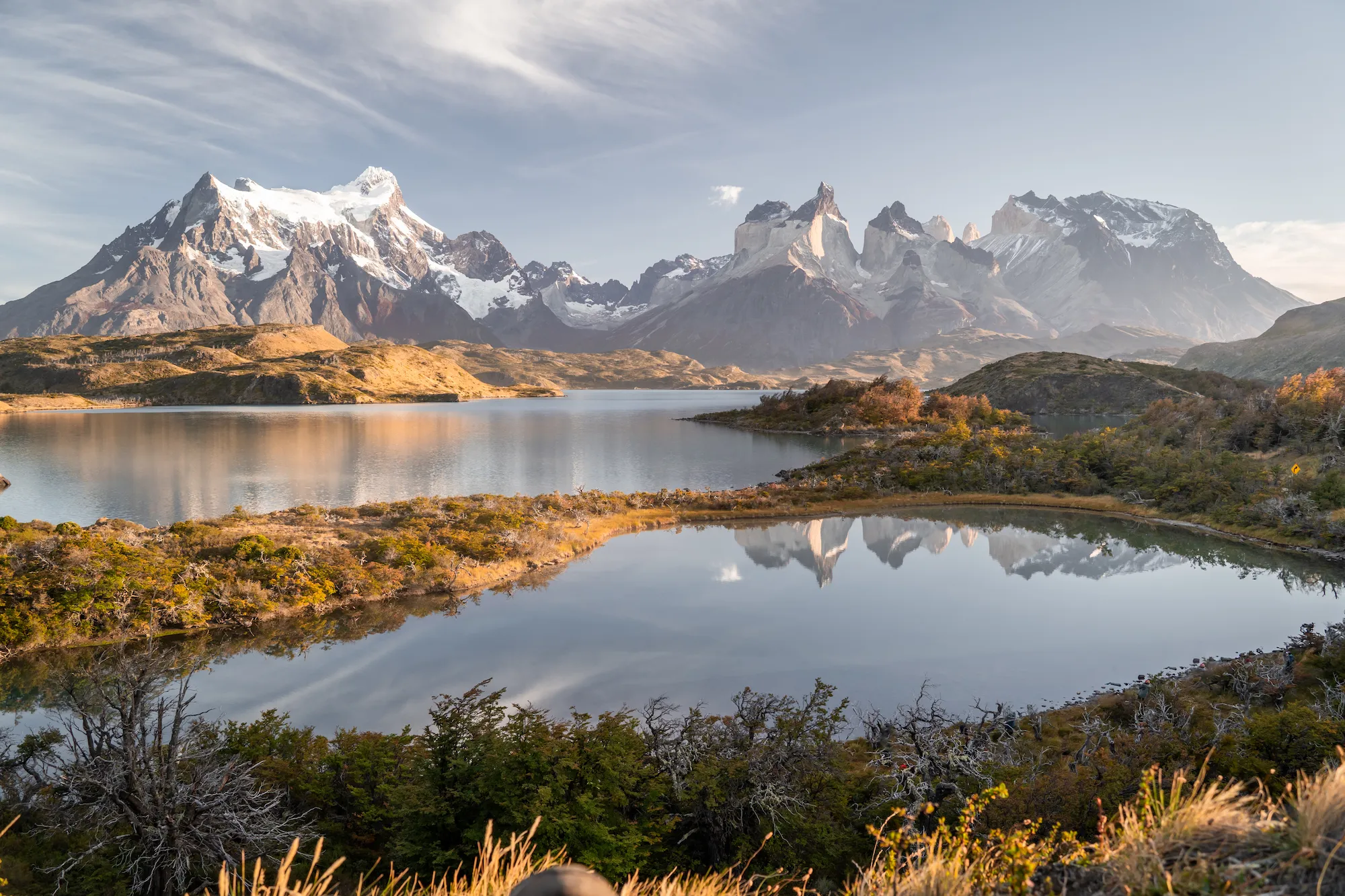
This series is a tribute to the moment when light and earth meet at their most dramatic point. Exploring the Argentine and Chilean Patagonia region during autumn, the photographer sought to capture the last glow of a season that transforms the landscape into a stage of fire and stone. The photographer explains that through these images, the borders between nations disappear, revealing a geographical unity created by the crimson hues of beech trees and the golden light caressing the peaks of the Andes. It is a record of silence, of waiting, and of the beauty of a cycle fading before the arrival of the winter snows.
Credit: © Daniel Clavería, Chile, Shortlist, Professional Competition, Landscape, Sony World Photography Awards 2026 Clavel
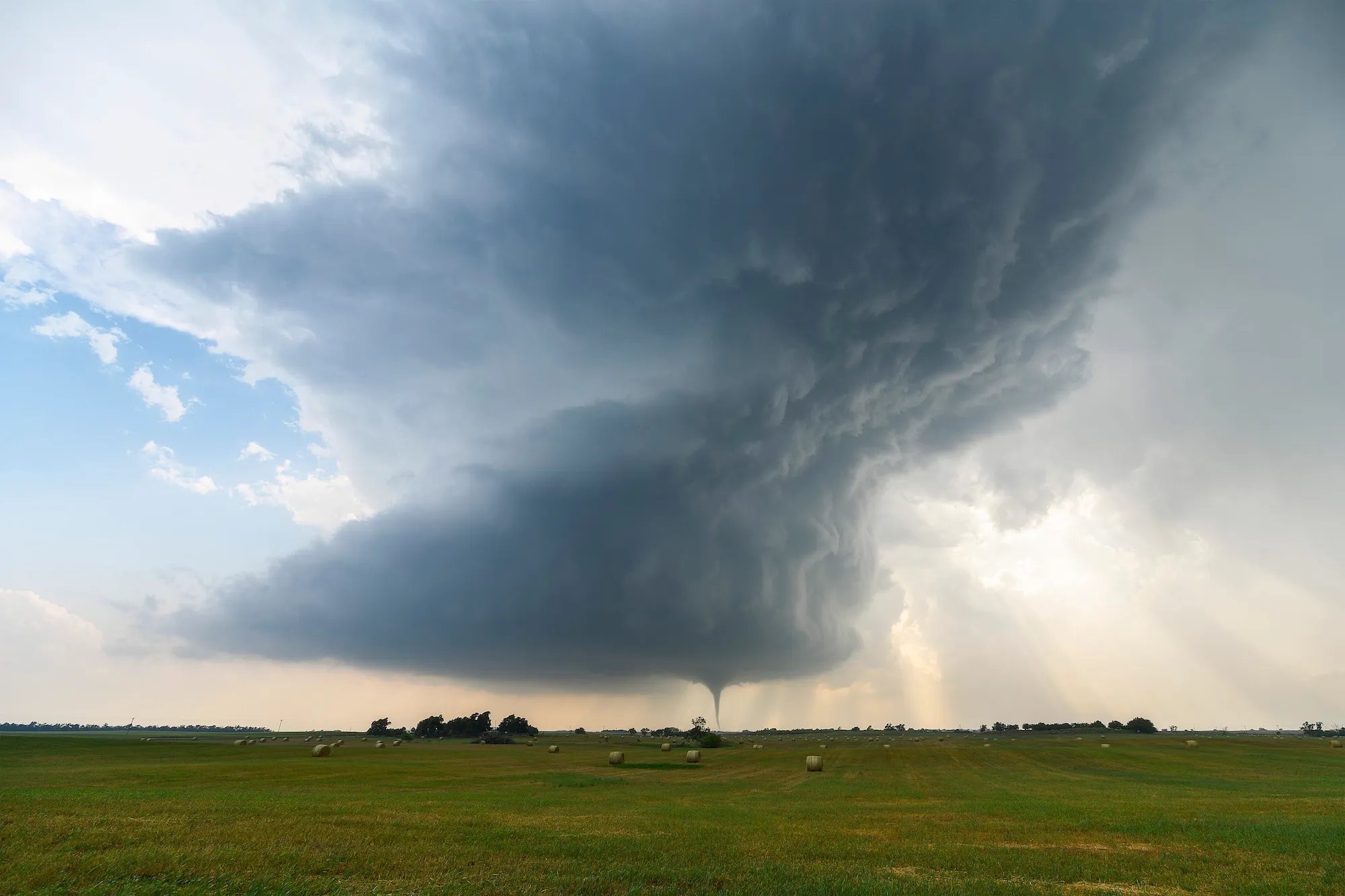
Tornado Alley is situated across the central United States of America and can produce some of the wildest weather on the planet. Supercells traverse Tornado Alley during spring and summer, bringing breathtaking scenes as Mother Nature creates unbelievable atmospheric sculptures. The 2025 season was one of the most intense in memory, as several extremely photogenic storms took place.
Credit: © David Baxter III, United States, Shortlist, Professional Competition, Landscape, Sony World Photography Awards 2026
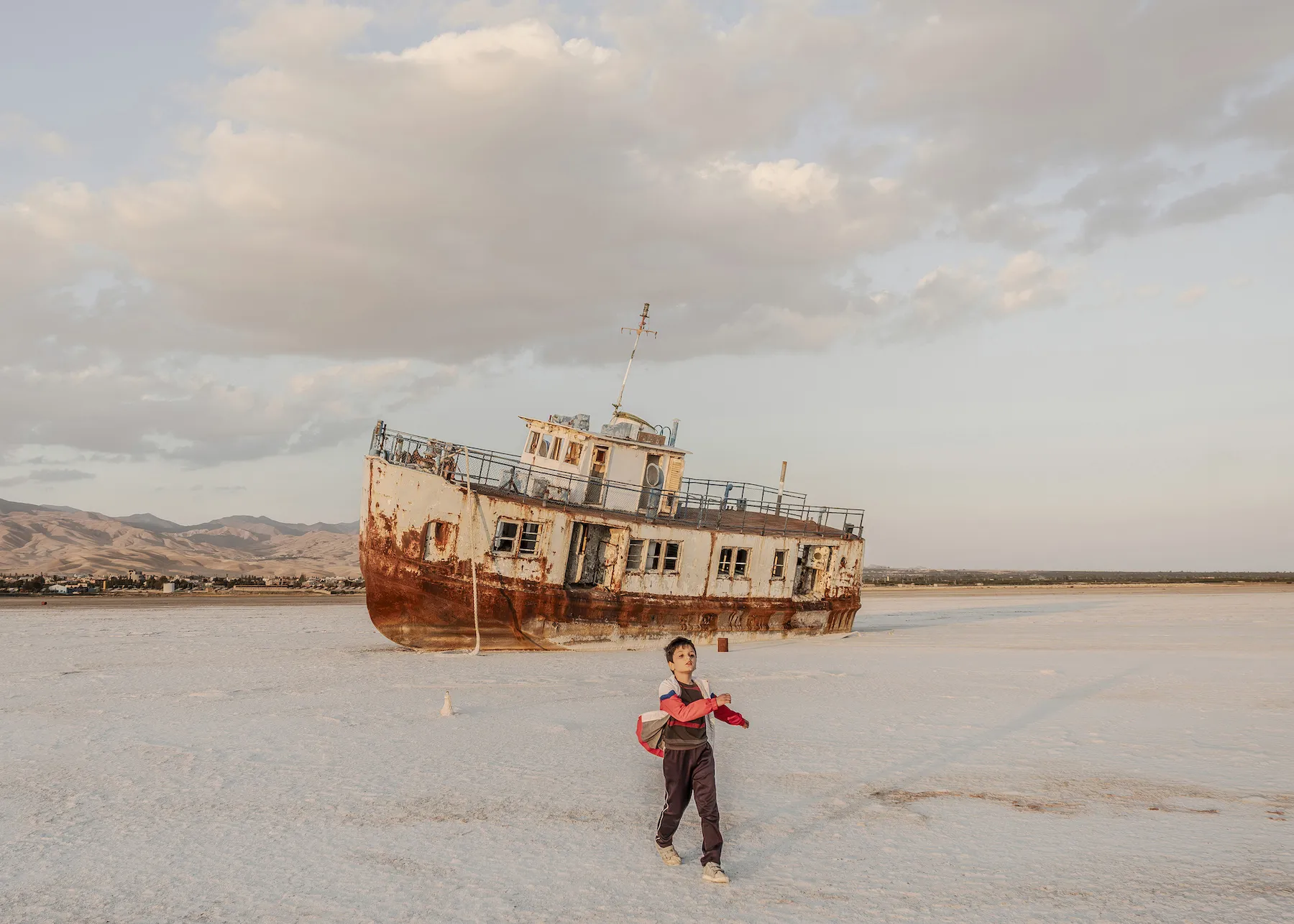
Like much of the world, large parts of Iran are facing a long-term drought crisis. Lake Urmia, in northwestern Iran, was once the largest saltwater lake in West Asia. It was a sanctuary for migratory and indigenous animals, and every year hundreds of tourists visited its shores. However, decades of drought, rising summer temperatures that accelerate evaporation, and increasing water demands from agriculture have shrunk the lake dramatically. Its water volume fell from 30 billion cubic metres in 1999, to just half a billion cubic metres in 2013, and today it is a barren salt marsh. Salt storms rising from its dry bed pose health hazards to surrounding regions, with more than 14 million people indirectly impacted by this environmental catastrophe. Deserted villages and small towns now surround the lake, as families have been forced to leave their homes, livelihoods and cherished memories behind. Lake Urmia stands as a silent witness to environmental neglect — a haunting reminder of what is lost when nature’s balance is disrupted.
Credit: © Hossein Sadri Nobarzad, Iran, Islamic Republic Of, Shortlist, Professional Competition, Environment, Sony World Photography Awards 2026 Hossein Sadri Nobarzad
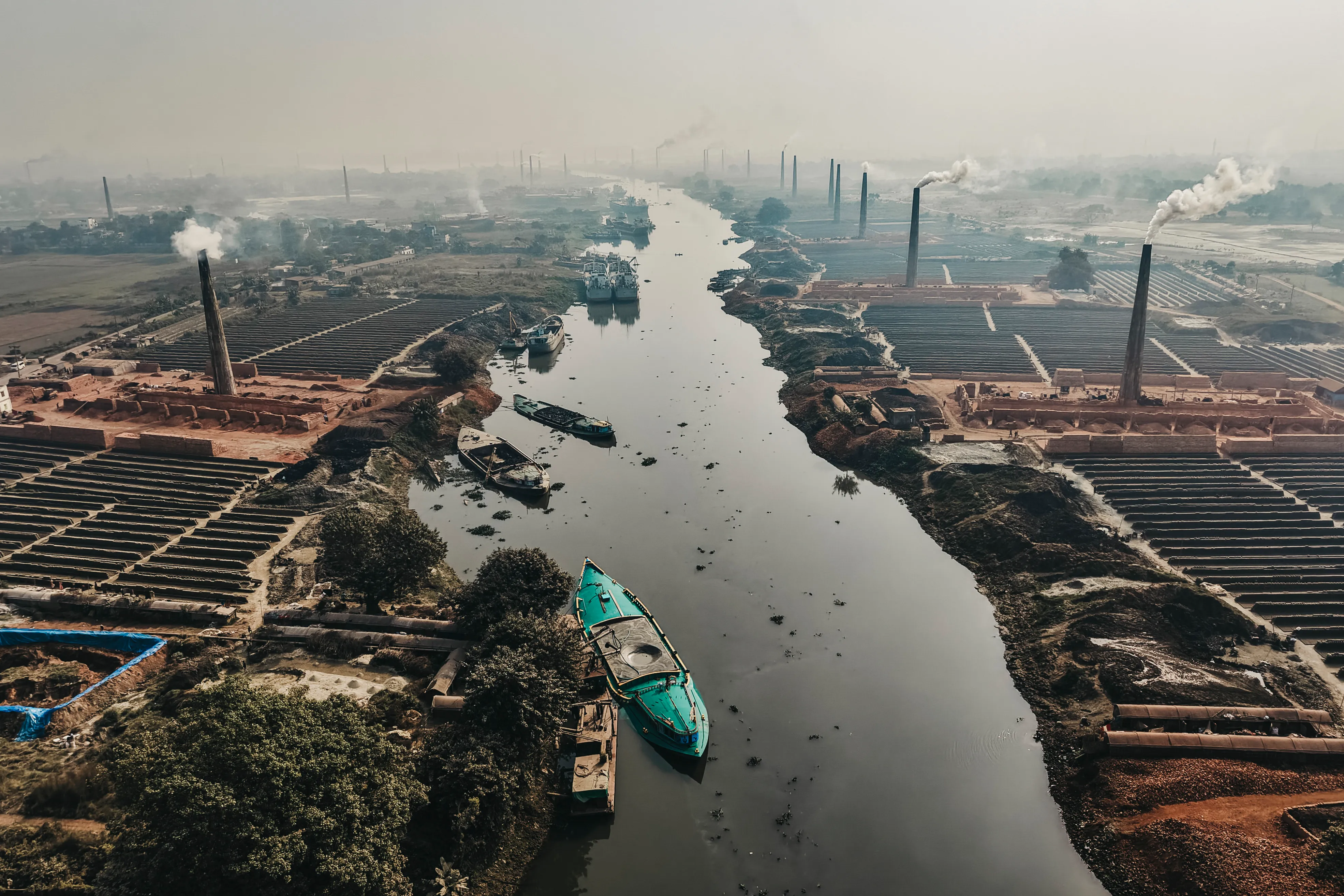
Once the lifeblood of Dhaka, the Buriganga River now flows as a toxic artery through the capital of Bangladesh. Thousands of factories dump untreated chemical waste into its waters, while residents use the river as an open landfill. Years of pollution have erased its flora and fauna, turning the river into a black, foul-smelling stream. The photographer poses the question: ‘Does Bangladesh have time to reverse this collapse?’
Credit: © Borja Abargues, Spain, Shortlist, Professional Competition, Environment, Sony World Photography Awards 2026
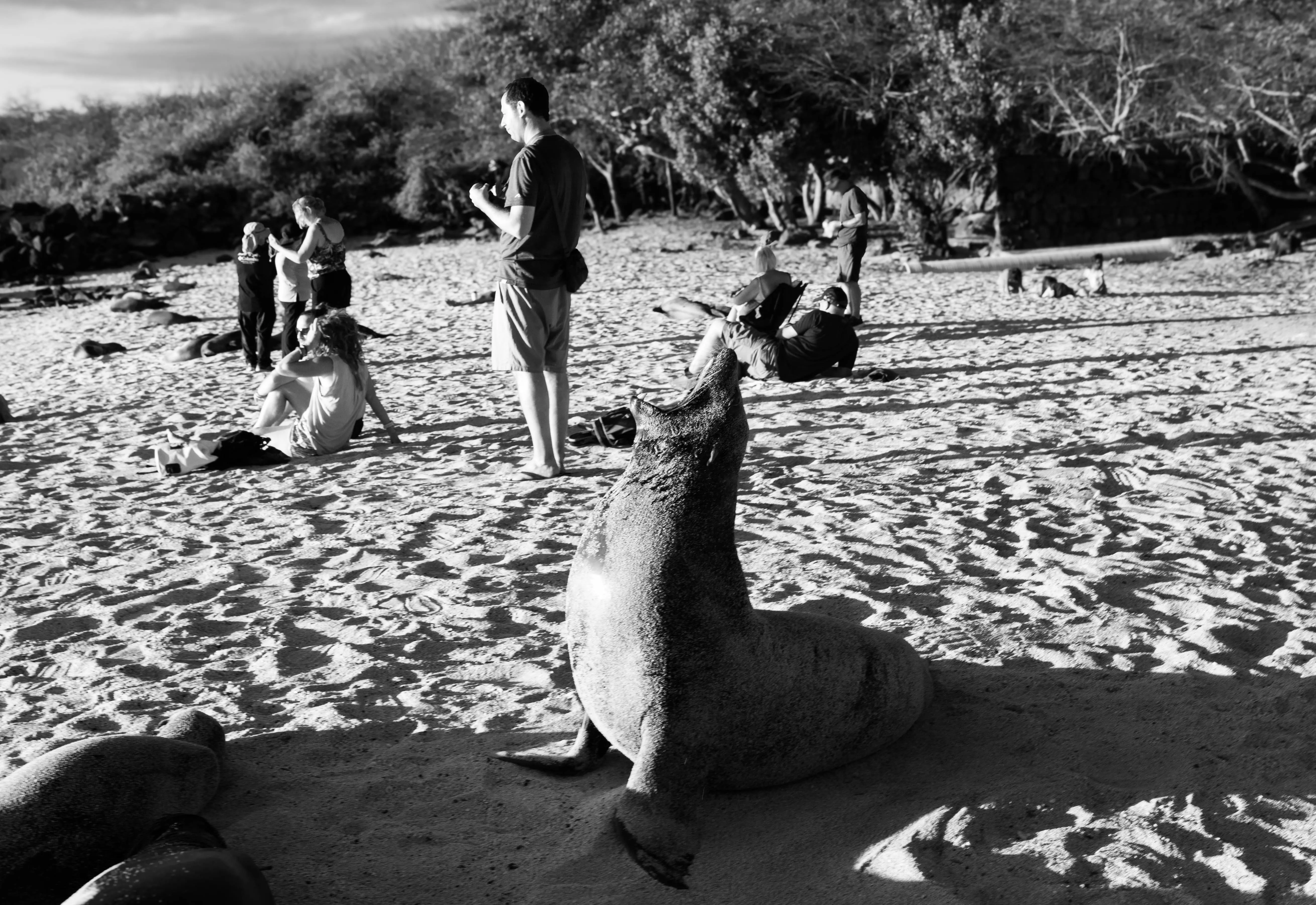
This documentary series, created in the Galápagos Islands, observes the fragile coexistence between Galápagos sea lions (Zalophus wollebaeki), an endangered species, and an urban landscape shaped by the steady rise of tourism. It follows a naturally territorial species as it navigates beaches, docks, and port streets — spaces increasingly shared with residents and visitors. These images do not seek spectacle but rather reveal a gradual loss of habitat and a growing uncertainty about how this coexistence can endure. The work invites a slower gaze and a reflection on how we inhabit the islands, and on the collective responsibility to protect a singular ecosystem under constant pressure.
Credit: © Eduardo Valenzuela, Ecuador, Shortlist, Professional Competition, Environment, Sony World Photography Awards 2026 Photographer: Edu Valenzuela
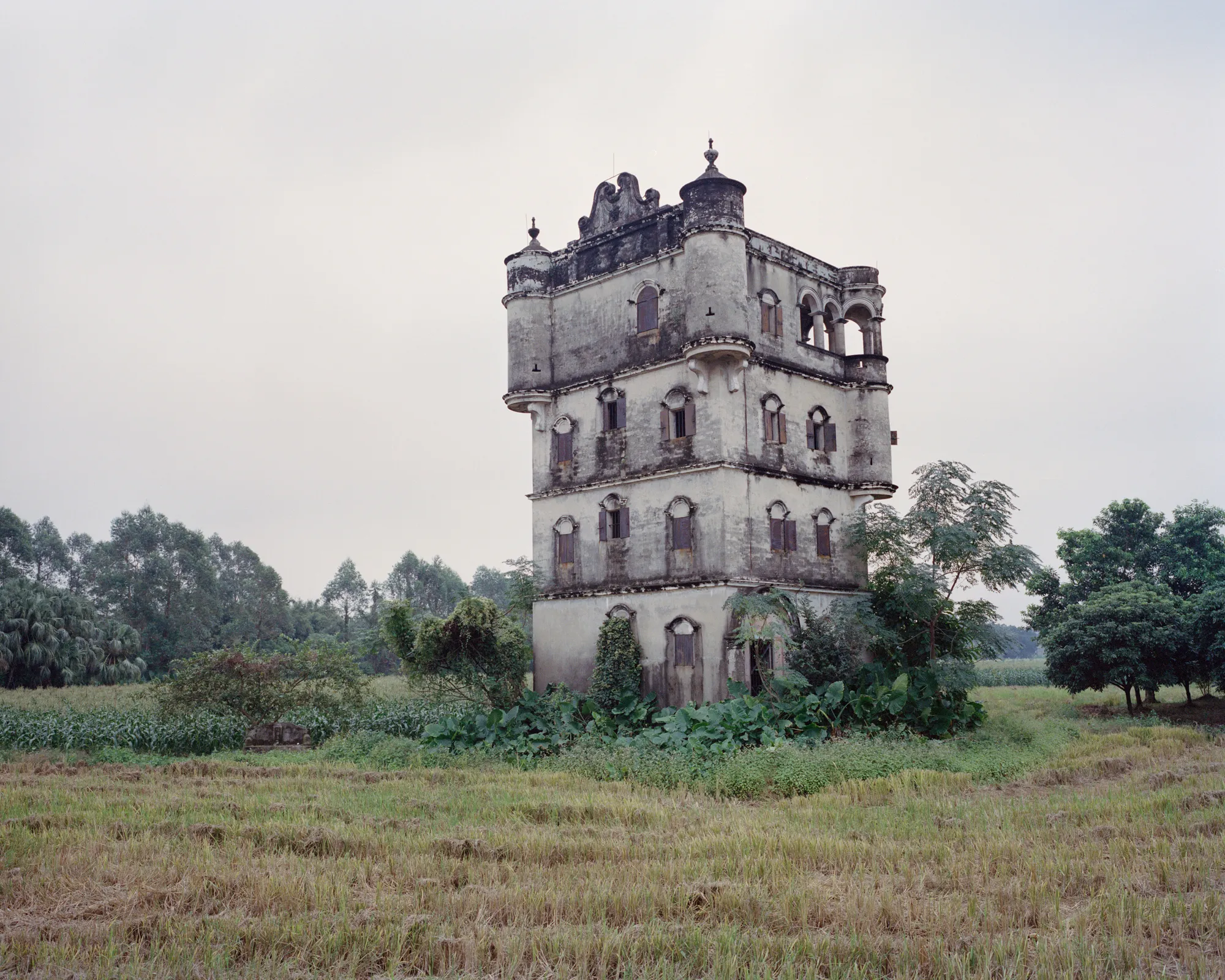
Many of the watchtowers in Jiangmen, in China’s Guangdong Province, were built during the time of the Republic of China (1912–1949), as public refuges and defensive fortresses. Most were constructed by Chinese people living overseas, who had returned to their home towns, or raised funds to build them in the countryside, making them a unique architectural form that combines both Chinese and Western influences. In 2007, the Kaiping Diaolou and Villages in Guangdong were officially designated a UNESCO World Heritage Site.
Credit: © Chen Liang, China Mainland, Finalist, Professional Competition, Architecture & Design, Sony World Photography Awards 2026 Dolphin

2025 PopSci Best of What’s New
VIA: popsci.com

