

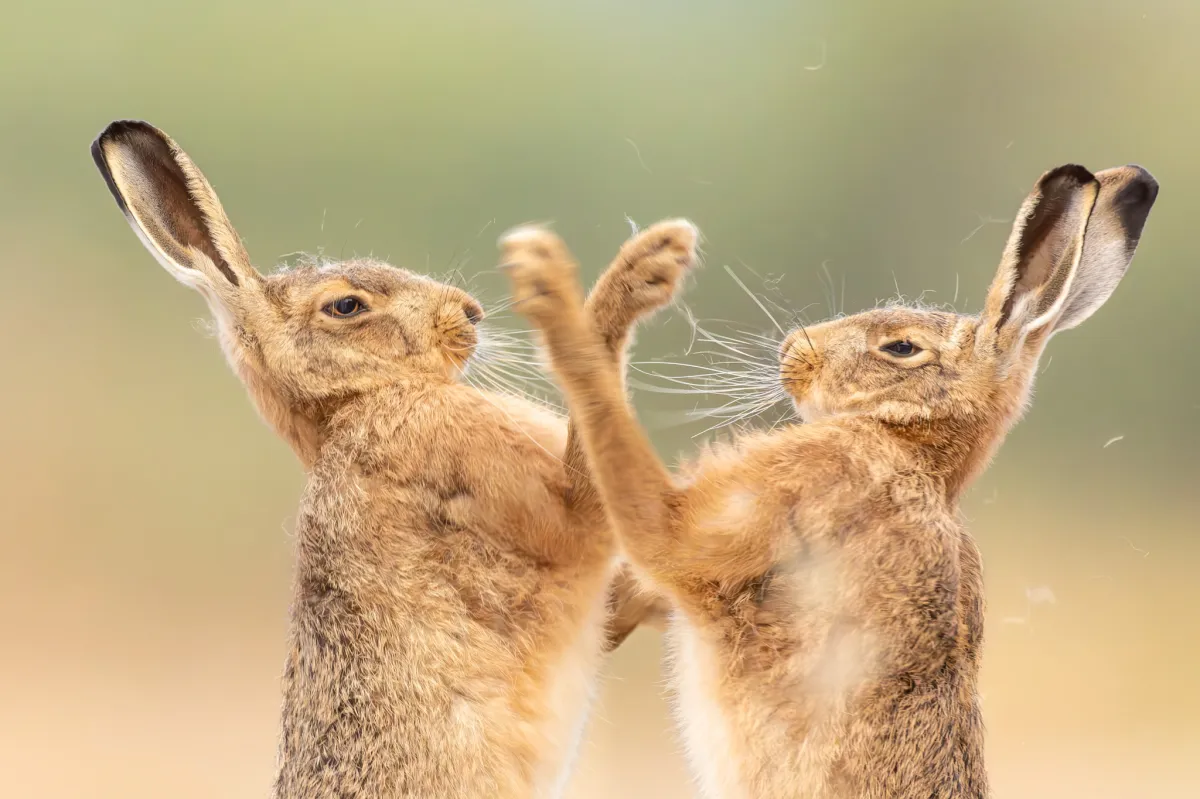
A pair of hares spar. A sparrow hawk pins down a starling. Nature can be fierce. It can also be serene and beautiful. The British Wildlife Photography Awards celebrate the diverse natural beauty of Britain.
“This year’s winners celebrate the wonder, diversity and character of British wildlife in truly exceptional ways,” says Will Nicholls, Director of BWPA. “From familiar species to rarely seen moments, the portfolio showcases the skill and passion of the photographers behind the lens. Together, they offer a joyful celebration of Britain’s natural world, while also reminding us why these places and species are so deserving of our care and protection.”
Animal Behaviour | Winner
Sparrowhawk and juvenile starling (Accipiter nisus and Sturnus vulgaris)
Royston, Hertfordshire, England
Because the sparrowhawk had never gone to ground before on previous visits to the garden and not knowing how long it would stay, I just wanted to get an image to record the event before then concentrating on my settings. The story I think the image portrays, is evident in the eye contact between the two subjects and the vice-like grip they have on each other, however, the eye contact and grip of the juvenile starling is out of pure fear whilst that of its nemesis is one of dominance and relief in finally catching a much needed meal.
Credit: Mark Parker / BRITISH WILDLIFE PHOTOGRAPHY AWARDS 2026 MARK PARKER
Top honors went to photographer Paul Hobson for his captivating image of a toad swimming through a pond (seen below). Capturing stunning wildlife photography takes patience—Hobson crafted a home-built glass box to house his camera underwater and then, he waited. “I had to wait quite a long time until a toad swam across the surface–most of them would usually swim below it and rest on the glass,” Hobson says.
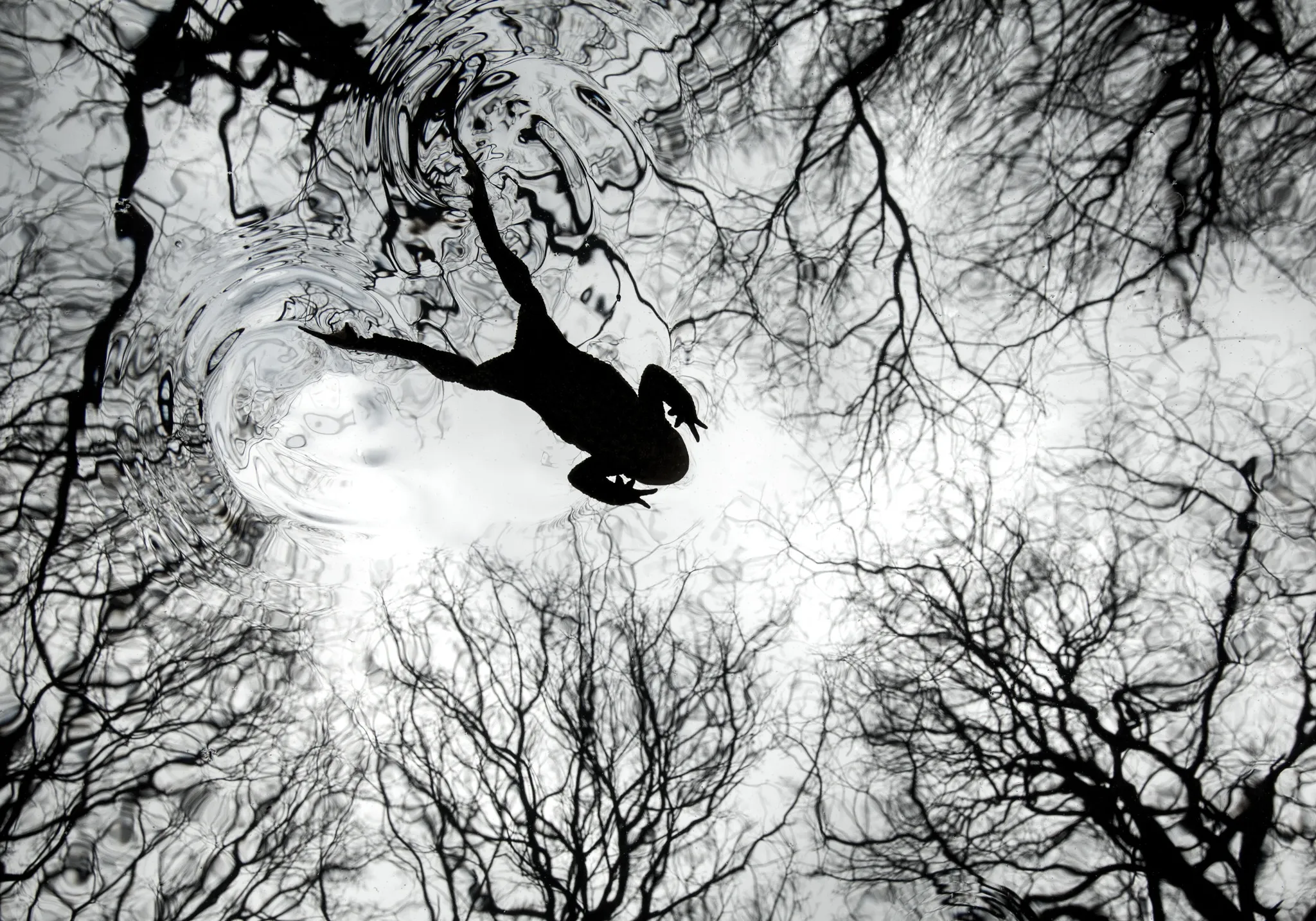
British Wildlife Photographer of the Year 2026 and Black & White Winner
Toad (Bufo bufo)
Sheffield, England
I am lucky to have a pond close to my house that has relatively clear water, especially in late winter and early spring before the algae starts to grow. Toads use this pond to breed in and I decided I wanted to try to capture an image looking up from the bottom of the pond. To try to do this I built a glass box to house the camera and keep it dry. I had to add ballast to make sure it would sink and used old tripod legs glued to its sides to keep the box level. I worked out the depth the box would be and set the focus so that it would capture a toad, if one swam across the surface. I triggered the camera using an adapted long cable release. I had to wait quite a long time until a toad swam across the surface – most of them would usually swim below it and rest on the glass.
Credit: Paul Hobson / BRITISH WILDLIFE PHOTOGRAPHY AWARDS 2026 Paul Hobson
More than 12,000 photographs competed across 11 different categories, including Animal Behaviour, Animal Portraits, Botanical Britain, Black & White, Coast & Marine, Habitat, Hidden Britain, Urban Wildlife, and Wild Woods. (Click images to view in full screen.)
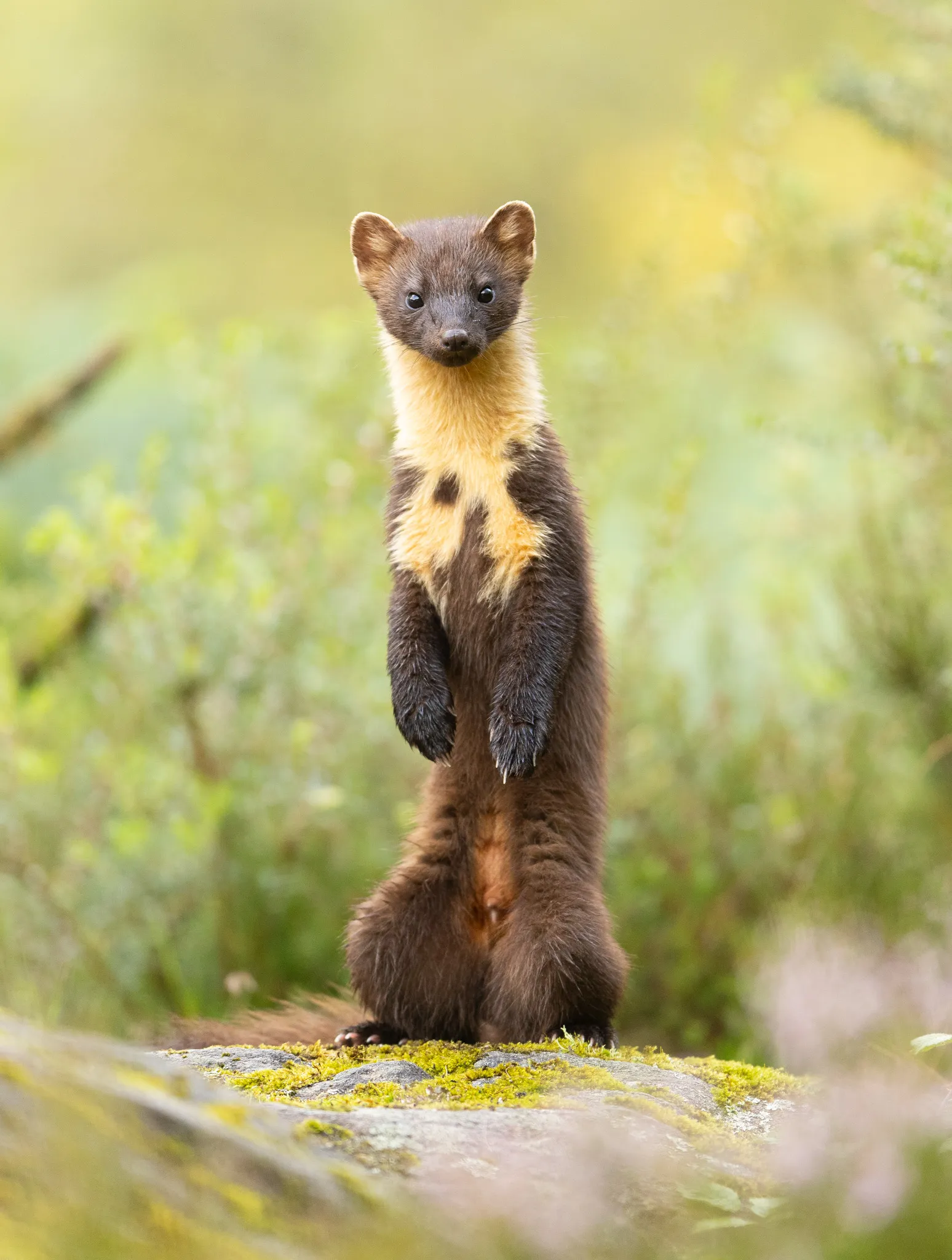
Animal Portraits | Winner
Pine marten (Martes martes)
Ardnamurchan, Scotland
I’ve been visiting Ardnamurchan in Scotland for 10 years now and it keeps me coming back. I visit every year in the hope of seeing pine martens. In the summer of 2024 I had one of my best visits up north with plenty of sightings, tempted by a small amount of peanuts I left out each evening. Every so often this young male would stand up to get a better view above the heather in front of him.
Credit: Alastair Marsh / BRITISH WILDLIFE PHOTOGRAPHY AWARDS 2026 Alastair Marsh
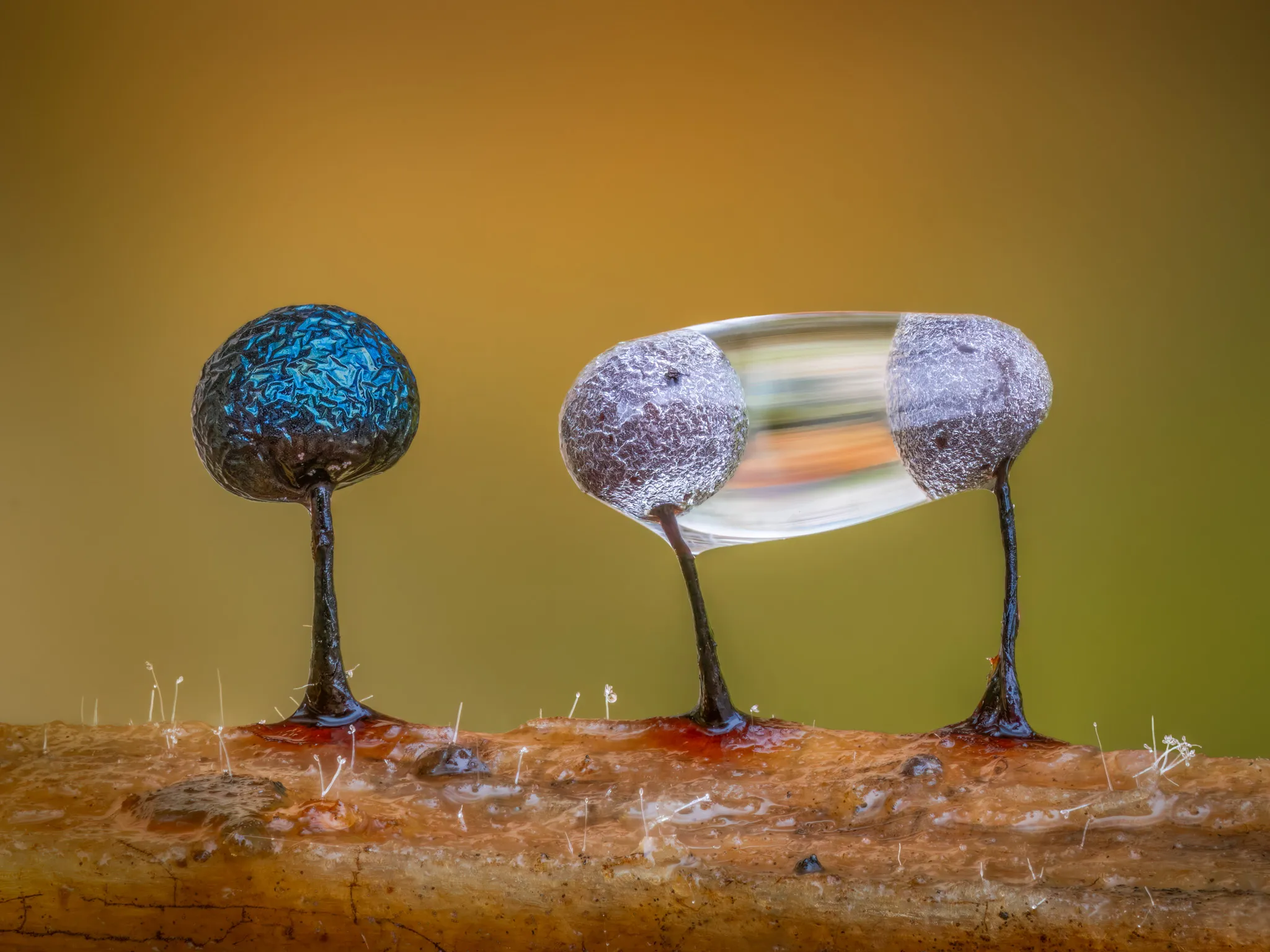
Botanical Britain | Winner
Slime mould (Lamproderma scintillans)
South Buckinghamshire, England
These 1mm-tall Lamproderma scintillans were found on a tiny fragment of wood, on a very wet woodchip pile. When the water droplet evaporated on the two fruiting bodies on the right, they dried out and reverted to their original blue colour. It is thought that the iridescent surface of these fruiting bodies may act as a water repellent in order to protect the spores within the sporocarp. A total of 87 shots were focus bracketed and then focus stacked to create the final image.
Credit: Barry Webb / BRITISH WILDLIFE PHOTOGRAPHY AWARDS 2026 Barry Webb
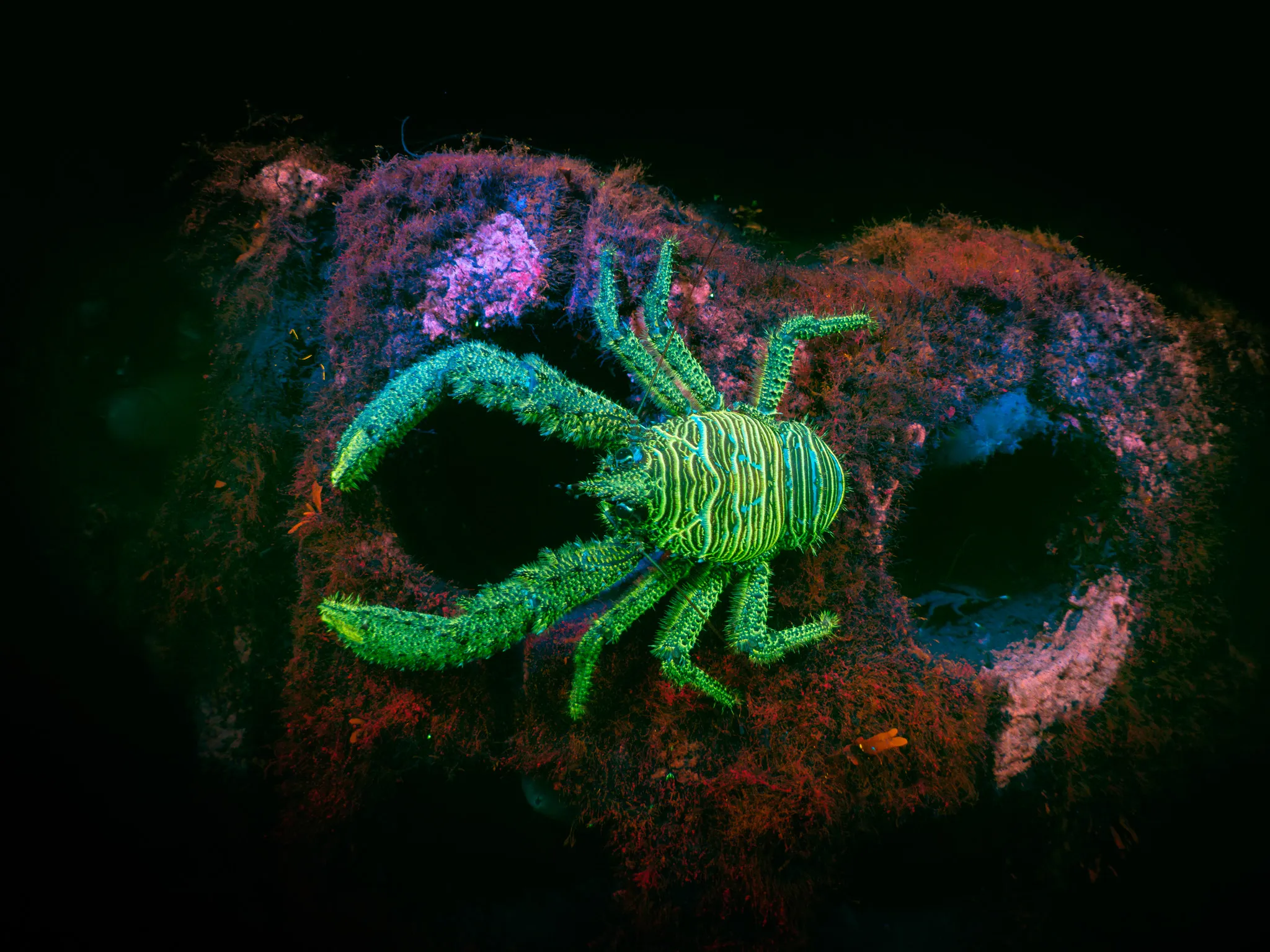
Coast & Marine | Winner
Spiny squat lobster (Galathea strigosa)
Inveraray, Loch Fyne, Scotland
A spiny squat lobster captured fluorescing during a night dive in Loch Fyne, in November 2024. Image taken using two Sea&Sea YS01-Solis strobes with Nightsea excitation filters. A FireDiveGear gel barrier filter was used behind the 8mm fisheye lens.
Credit: James Lynott / BRITISH WILDLIFE PHOTOGRAPHY AWARDS 2026
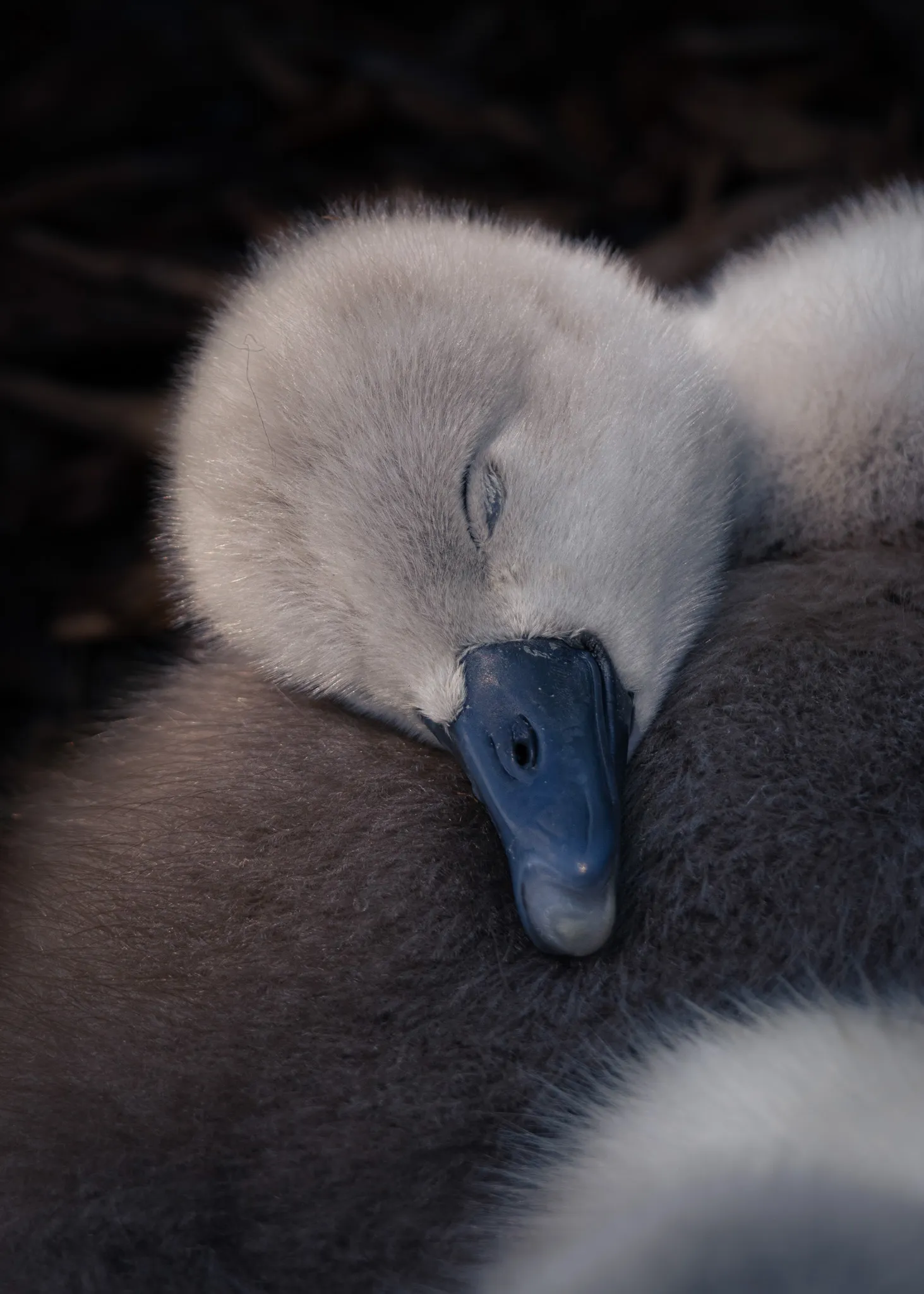
Young British Wildlife Photographer of the Year 2026 and 15-17 Years Winner
Mute swan (Cygnus olor)
Hornchurch, England
This was such an adorable moment to witness. A whole family of mute swans swam up to me as I was quietly sitting on the bank of a beautiful lake. They all lay down for a rest right beside me. The five newly hatched cygnets curled up together in a fluffy grey bundle and I captured this photo as one lay its little head on the back of its sibling. Nature can often be so cruel, but tender moments like this warm my heart!
Credit: Ben Lucas / BRITISH WILDLIFE PHOTOGRAPHY AWARDS 2026
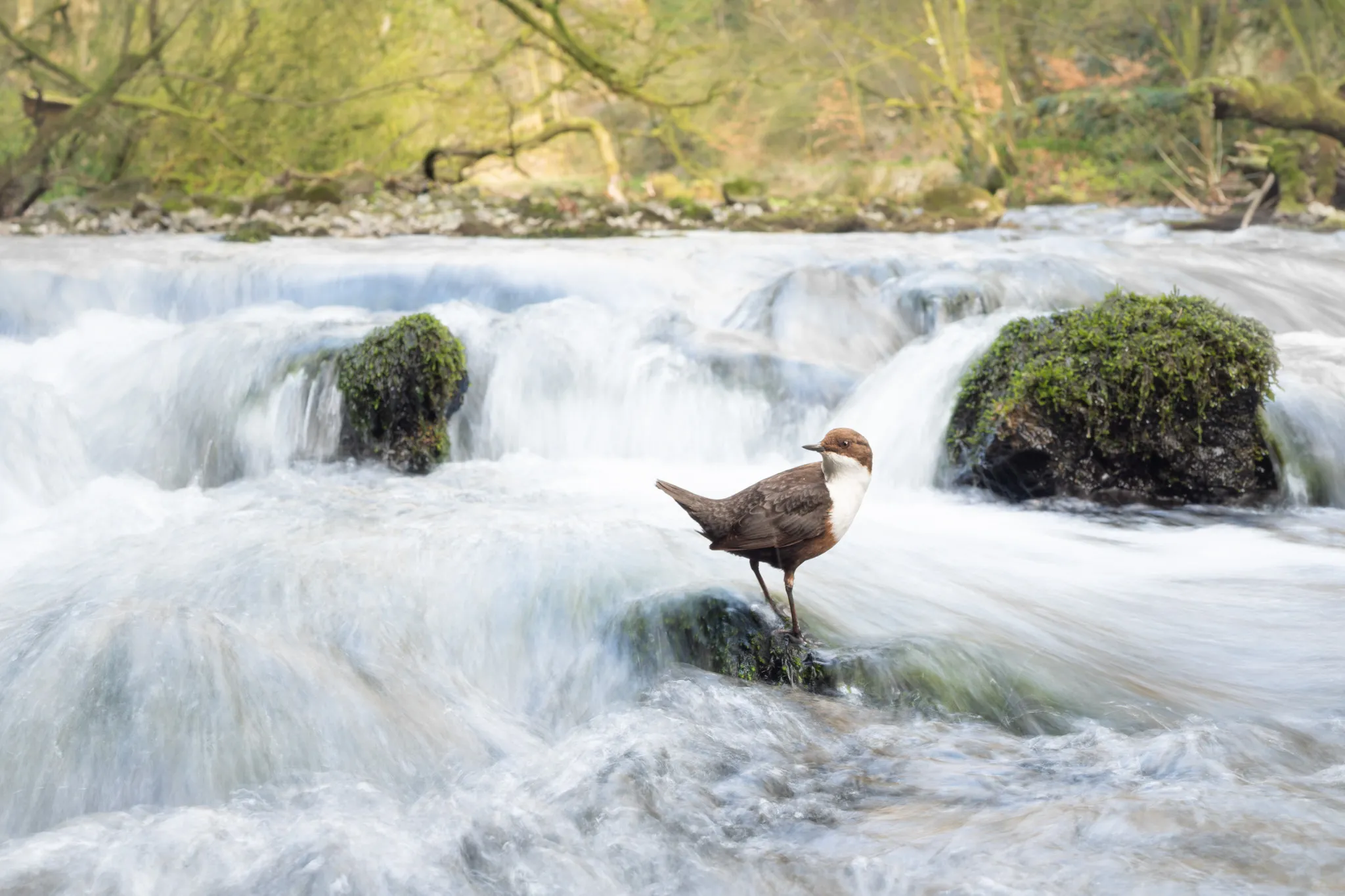
Habitat | Winner
Dipper (Cinclus cinclus)
Derbyshire Dales, England
Dippers are creatures of habit, and after spending numerous days observing these entertaining birds I was able to discover many of their favoured rocks. I wanted to capture something different, encapsulating the stunning woodland and rushing white water that these birds are so at home in. For this photo I utilised a wide-angle lens, and so as to limit disturbance, I waded into the water, framed up my shot using a tripod, manually focussed on the rock and used a remote shutter whilst sat on the riverbank. To capture the painterly effect in the water, I used a shutter speed of 1/15s.
Credit: Marc Humphrey / BRITISH WILDLIFE PHOTOGRAPHY AWARDS 2026
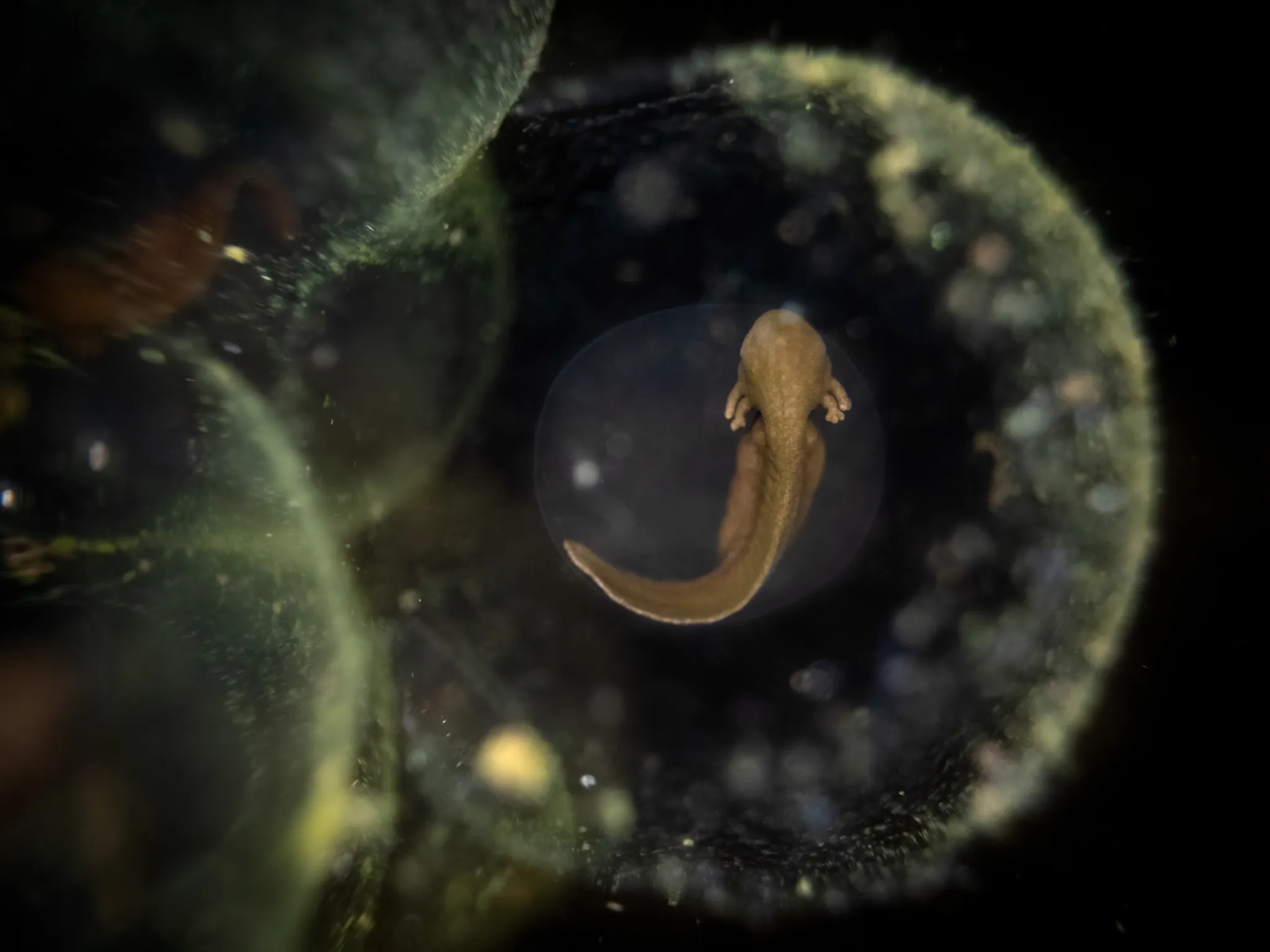
Hidden Britain | Winner
Common frog (Rana temporaria)
Messingham, England
During 2020, many of us around the world were isolating at home due to various lockdowns brought on by the COVID-19 pandemic. My dad and I decided to build a reflection pool in our back garden as a way to continue photographing the wildlife around our house, which mainly consisted of birds and hedgehogs at night. Fast forward four years, and the reflection pool remains unused and unloved, at least by us. Over this time, however, it seems that various frogs have taken a liking to our pool, so much so that they have spawned in it. Using the Laowa 24mm Probe lens, I was able to partially submerge the lens into the pool and photograph what was happening underwater. The lights at the end of the probe illuminated the scene, allowing me to capture a close-up macro image of a single egg still attached to the rest but hanging on the edge of the spawn ball. Seeing the details of the developing embryo was an incredibly unique and special moment for me, both as a photographer and as a biologist. This experience
also serves as a reminder that, given the chance, nature can bounce back. Even in our own gardens, we can find incredible wildlife moments.
Credit:Julian Terreros-Martin / BRITISH WILDLIFE PHOTOGRAPHY AWARDS 2026
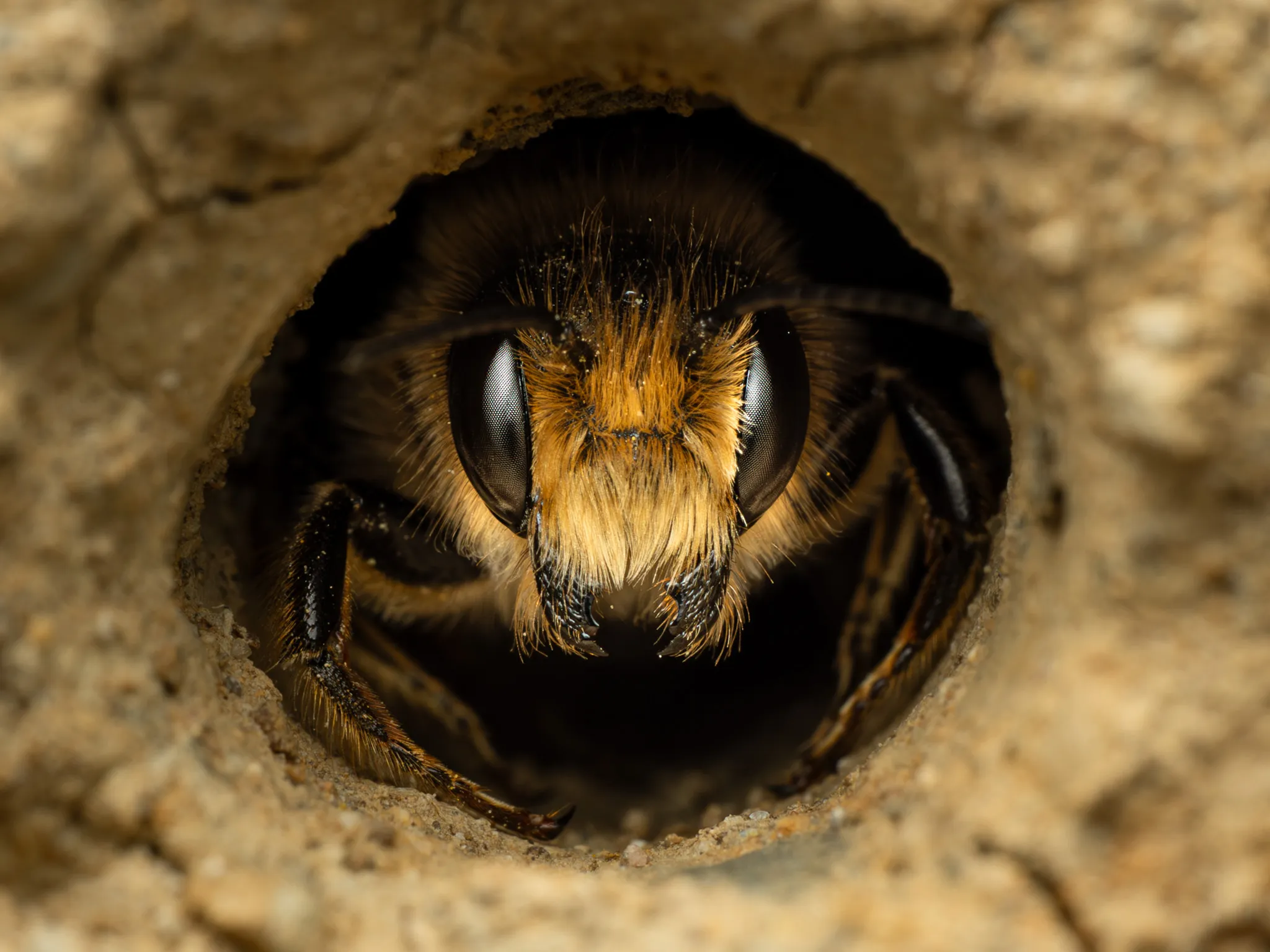
11 and Under | Winner
Leaf-cutter bee (Megachilidae)
Powys, Wales
I adore bees and have spent a lot of time this year studying them and finding out about what I can do to help the wild bees around our garden thrive. I designed and made a bee hotel using clay and have watched it flourish. One day, as I was walking past it, I spotted this leaf-cutter bee poking her head out of one of the clay holes and thought it would make a lovely photo, so I ran back inside to grab my camera and hoped that she would still be there when I returned – luckily, she was! Using my macro set up – the OM1 Mark II with a speed flash and Cygnustech diffuser – I managed to capture this image of her
looking at me from inside the clay hole. It was quite tricky to get the light to penetrate into the hole, as she had gone a little deeper inside by the time I had returned and I didn’t want to disturb her too much by going too close, so I cropped in and adjusted the highlights and shadows in the editing phase to create this image.
Credit: Jamie Smart / BRITISH WILDLIFE PHOTOGRAPHY AWARDS 2026
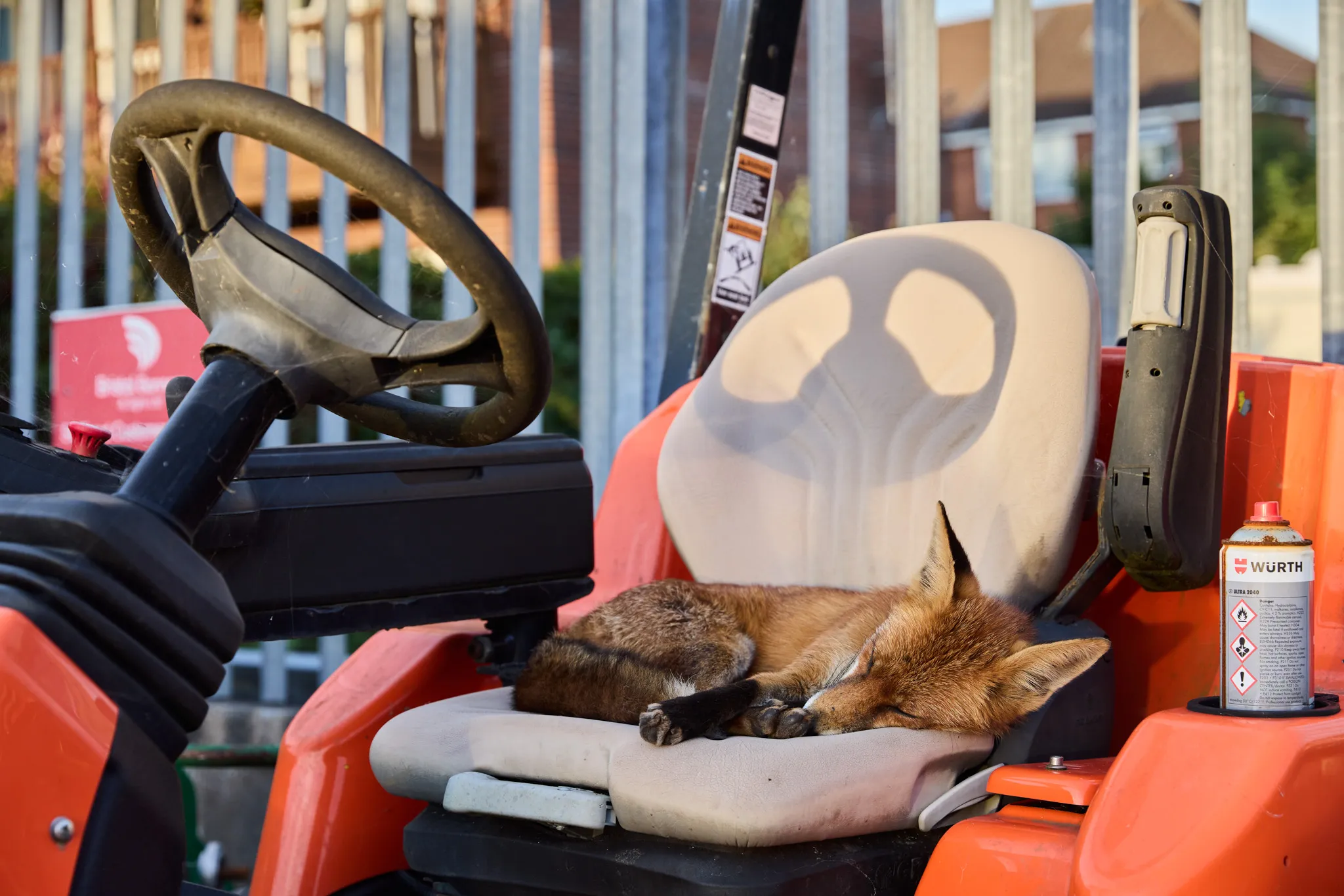
Urban Wildlife | Winner
Red fox (Vulpes vulpes)
Gloucestershire, England
After discovering a family of foxes living on a trading estate, I initially used my car as a hide. Over several weeks, I gradually introduced myself and my camera equipment, allowing time for this young mother to become familiar with my presence and learn that I posed no threat. I often saw her resting in some unusual spots, but none more so than on this cushioned seat of an old vehicle. It was clearly a much more comfortable place to sleep compared to her hard, concrete surroundings.
Credit: Simon Withyman / BRITISH WILDLIFE PHOTOGRAPHY AWARDS 2026 Simon Withyman
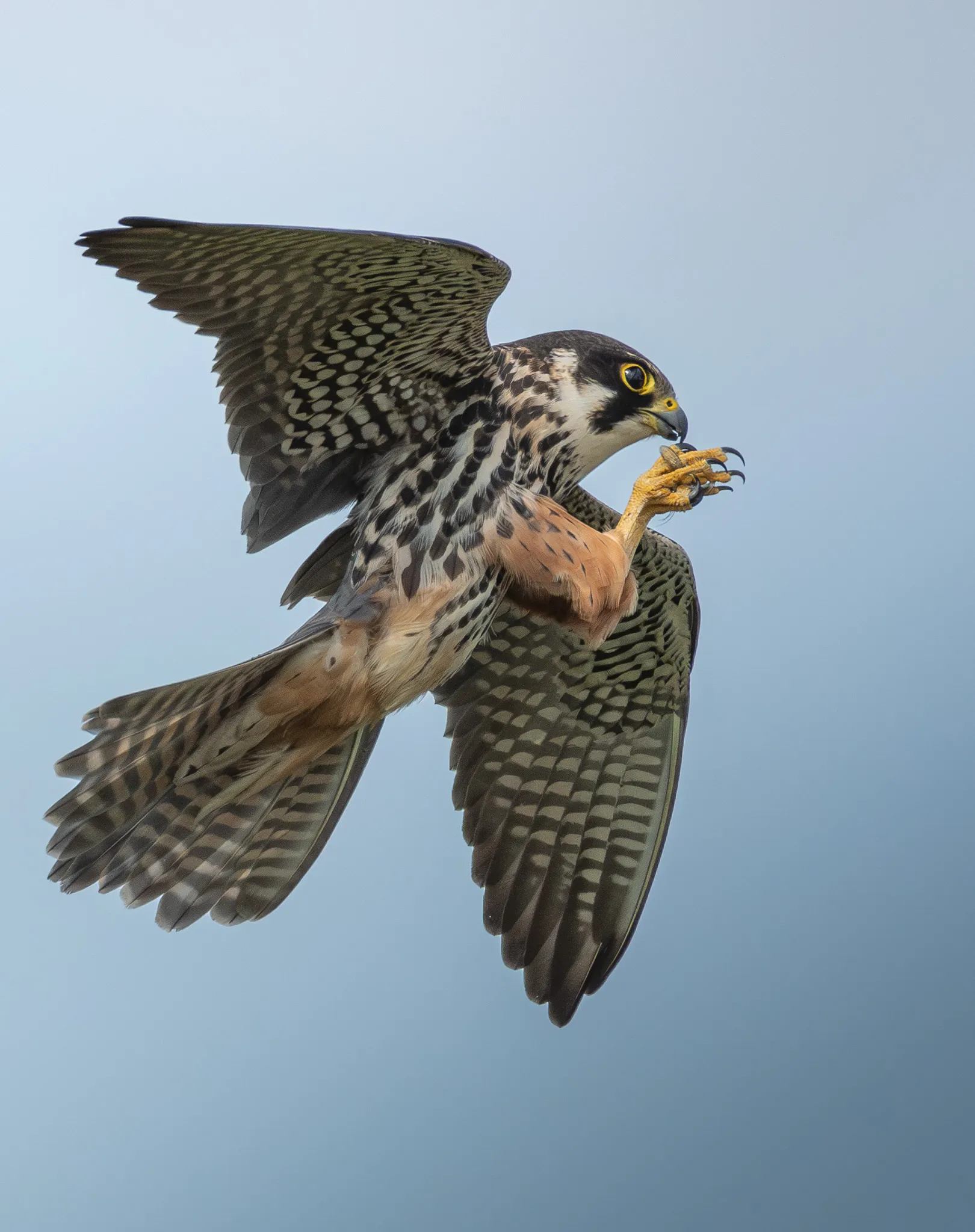
12-14 Years | Winner
Eurasian hobby (Falco subbuteo)
Staines Moor, England
This is the Eurasian hobby, a small yet remarkably agile bird of prey. They combine their speed with this agility for a unique trait; catching insects mid-air. The size of their prey doesn’t affect them, as it can vary from the smallest of flies to small birds. First, they lock on to their target. Next, they reach out with their super-sharp talons and snatch their prey. In this moment, a mayfly was unlucky as it became the hobby’s next snack.
Credit: Jack Crockford / BRITISH WILDLIFE PHOTOGRAPHY AWARDS 2026
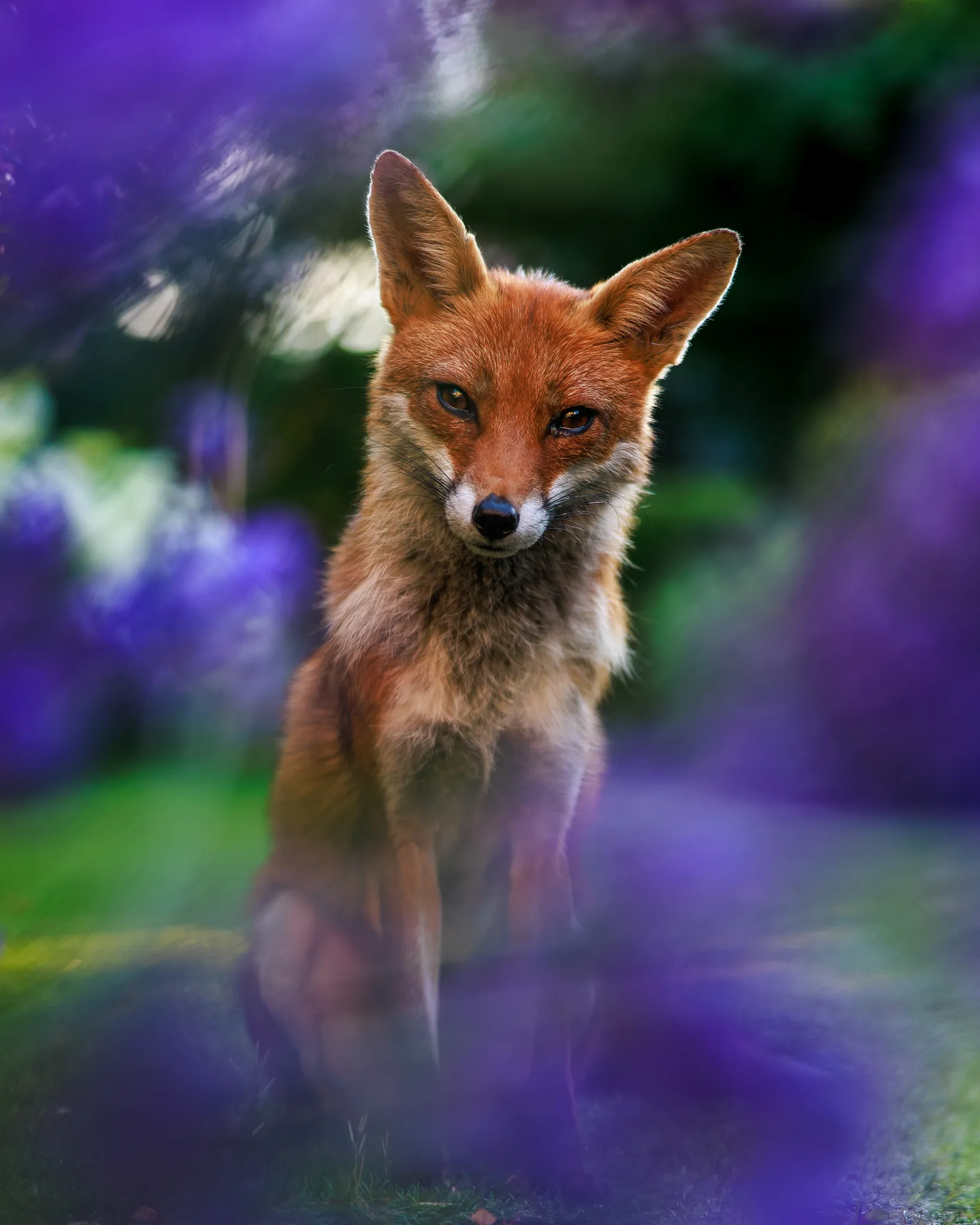
Animal Portraits | Runner-up
Red fox (Vulpes vulpes)
Richmond, England
In summer 2024, I had an unexpected visit from a neighbourhood fox who decided to come by my garden. Probably attracted by the commotion around the bird feeder, she sat on the lawn and allowed me to get close. I grabbed a medium telephoto lens with a very wide aperture and took her portrait through a gap in the lavender. Later in June, after multiple visits, and considering the prevalence of mange in my area, I decided to get a mange deterrent from the National Fox Welfare Society, which I administered to her in a small portion of cat food!
Credit: Felix Belloin / BRITISH WILDLIFE PHOTOGRAPHY AWARDS 2026
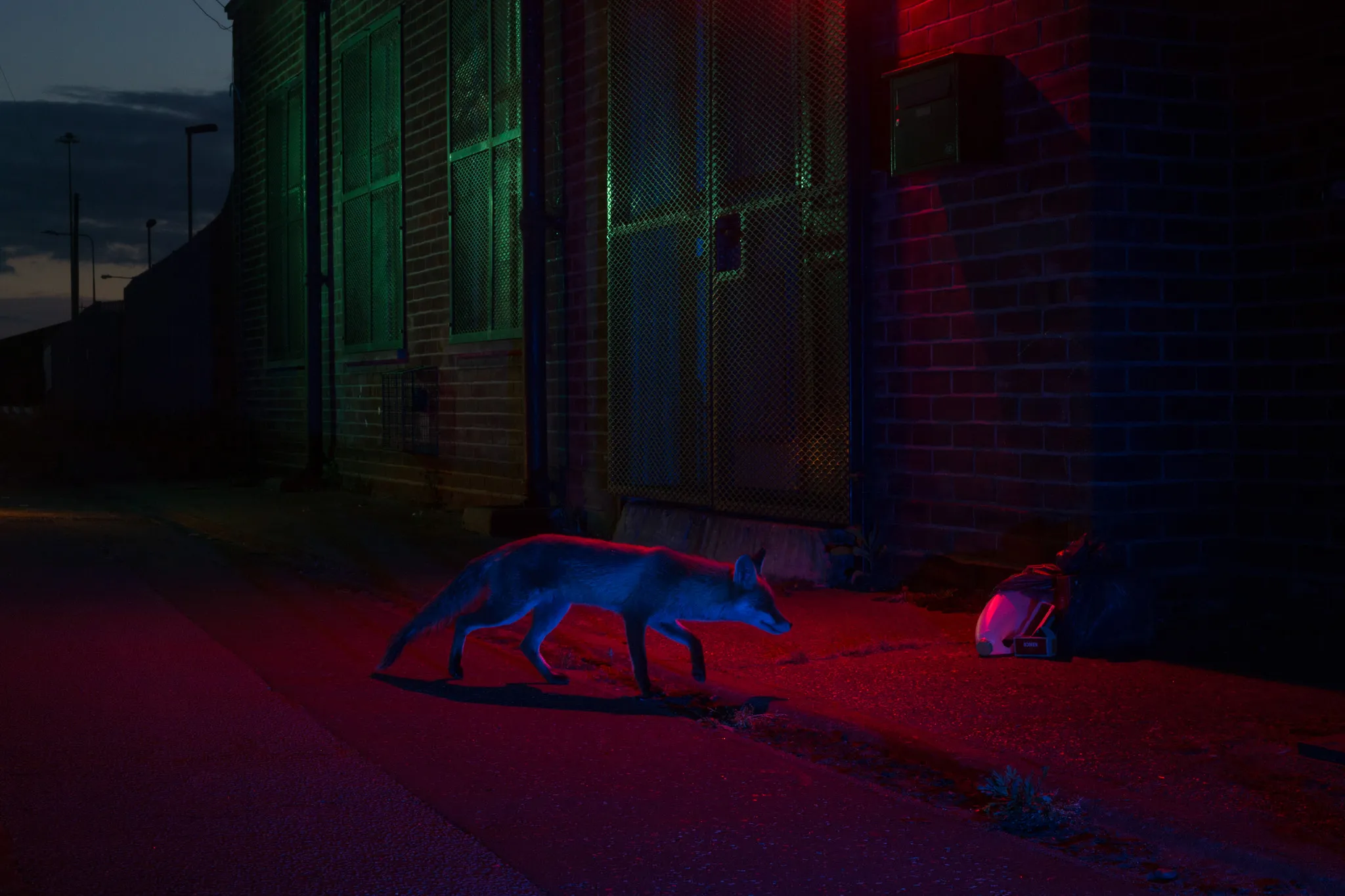
Urban Wildlife | Runner-up
Red fox (Vulpes vulpes)
Lowestoft, England
While working on a project photographing foxes in the urban environment, I was drawn to this particular security hut because of the neon lighting. The fox was used to receiving handouts from the night security workers and would frequently come up to the windows, waiting for an easy meal. I set up my camera and used a wireless remote so as not to disturb the fox. A subtle flashgun was used to illuminate the ghostly shape as the fox approached some litter left by the main door.
Credit: Kyle Moore / BRITISH WILDLIFE PHOTOGRAPHY AWARDS 2026 Kyle Moore
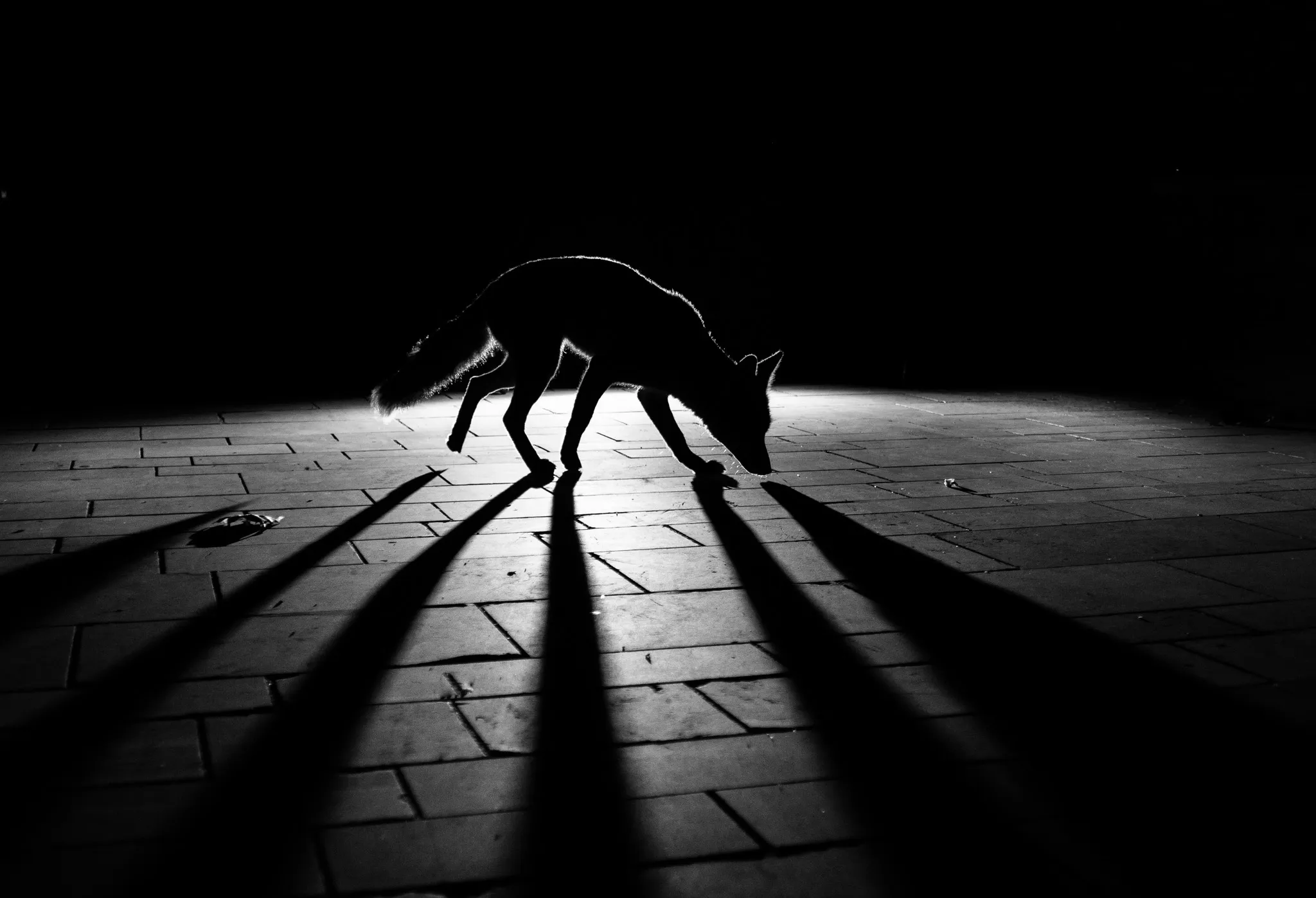
Black & White | Runner-up
Red fox (Vulpes vulpes)
Bristol, England
I set up a single flash hoping that I could photograph a local fox, with the tiling of the pavement visible. After a few hours, I was lucky enough that all the ingredients came together and the fox walked across the path of the flash. I used a tiny piece of chicken as bait for the rough area. I had to time it right to use the fox’s body to block the flash so as not to blow out my photo. I have followed this urban fox family for some time and they are relaxed with my use of lighting.
Credit: Chris Wardell / BRITISH WILDLIFE PHOTOGRAPHY AWARDS 2026

2025 PopSci Best of What’s New
VIA: popsci.com

