

Let’s address the elephant in the room first. Avalanche Studios Group has made a number of studio closures and layoffs over the past few years, shuttering its Montreal and New York offices in 2024, followed by its Liverpool studio last year, which had only opened in 2020. The group has now been reduced to around 400 people spread across offices in Stockholm and Malmö.
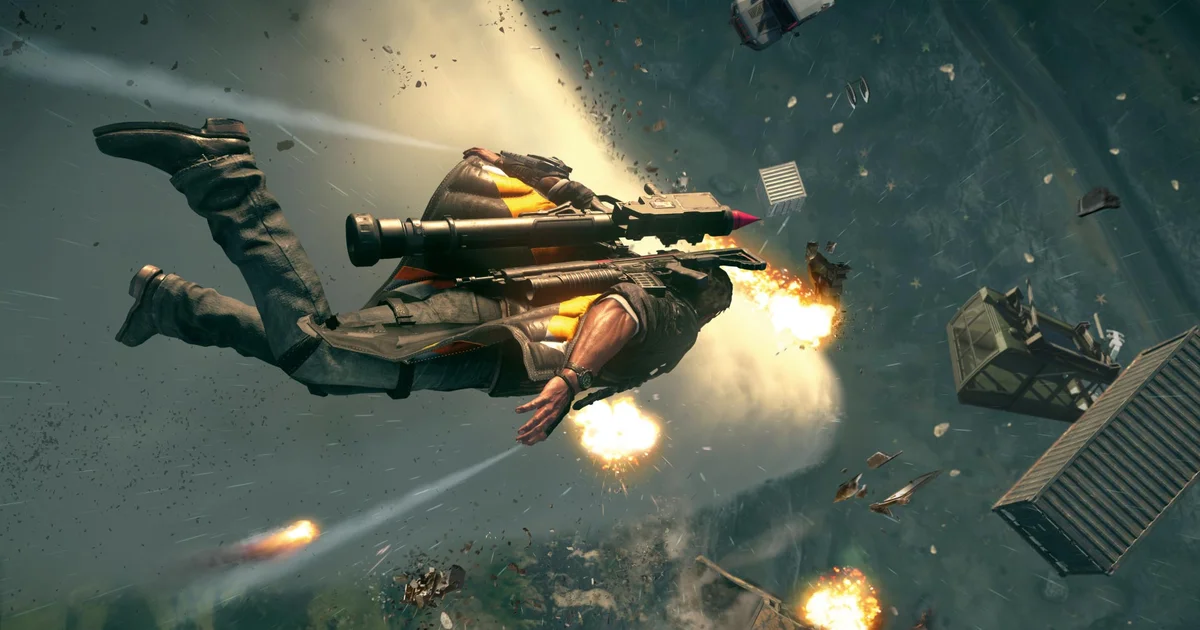
Clearly, then, things haven’t exactly been going swimmingly for Avalanche Studios of late (which is not to be confused with the similarly named Hogwarts Legacy developer Avalanche Software in Utah). The studio is probably best known for its enjoyably chaotic Just Cause games, but the last entry in the series, Just Cause 4, came out way back in 2018, and a mooted mobile spinoff was cancelled a few years ago.
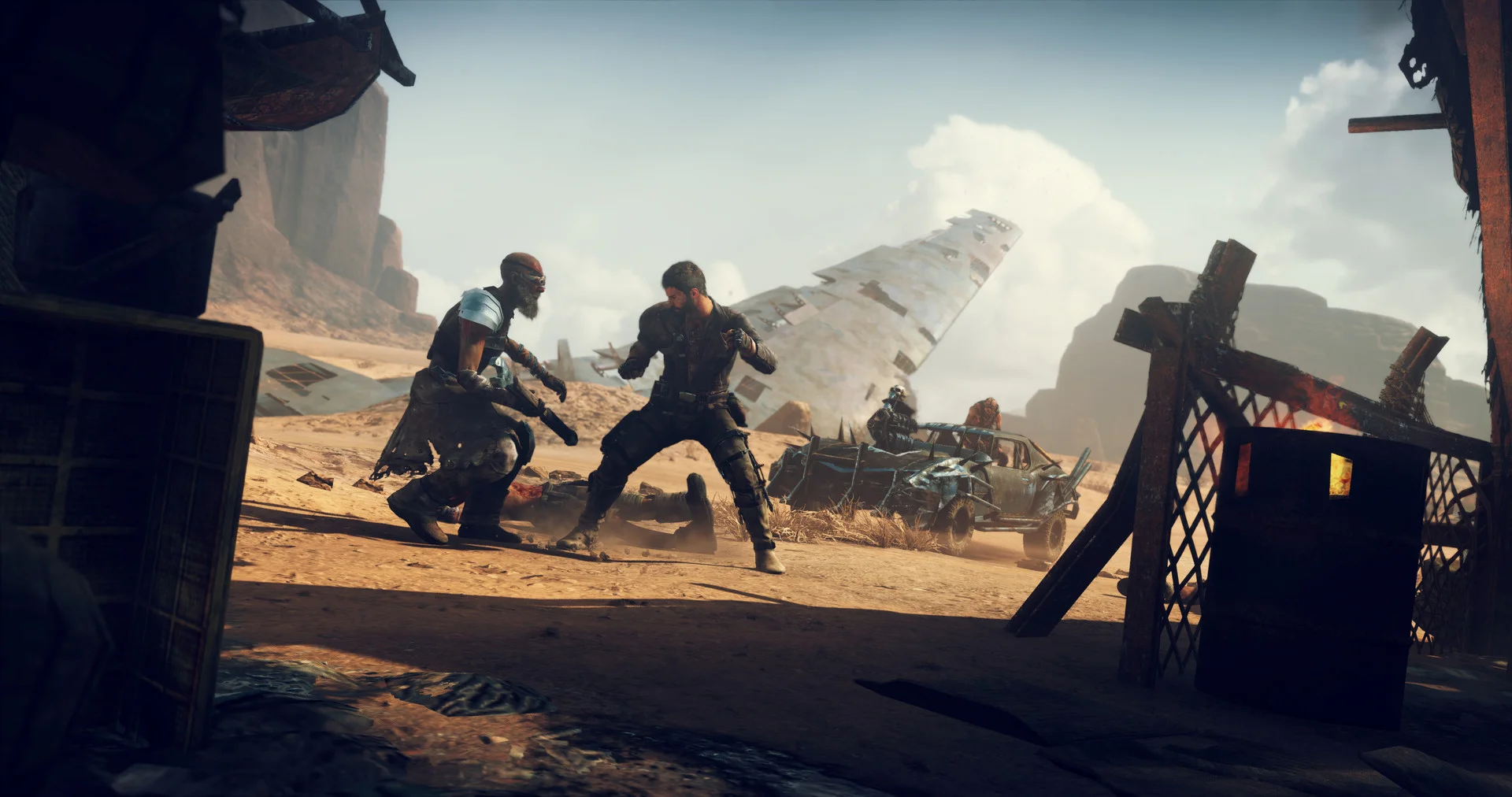
Avalanche was also behind the 2015 Mad Max game (which received fairly tepid review scores at the time, but which has since developed a reputation as being something of an underrated gem), as well as developing 2019’s Rage 2 on behalf of Bethesda. Generation Zero from the same year – which saw players battling giant robots in rural 1980s Sweden, but definitely wasn’t inspired by the art of Simon Stålenhag – limped out to a Metacritic score of 51, although subsequent updates significantly improved the game. That title was from Avalanche’s Systemic Reaction division, which was also behind Second Extinction (released in 2020 but cancelled before leaving Early Access) and Ravenbound (which saw its Steam concurrent player count tumble to just 45 a month after launch in 2023, according to SteamDB).
Given all that, it’s perhaps easy to guess why Avalanche has reversed course on its expansion plans. “I think like many companies in the industry over the last couple of years, we’ve had to make some really difficult decisions for the sustainability of the business, and there have been some changes to the projects that we had to account for,” says Emma Farrow, Avalanche’s chief publishing officer, when asked about the reasoning behind the studio closures. Those project changes include the decision to sunset Generation Zero last year, which Farrow says “no longer made sense” to maintain.
“And then of course we did see the news about the pause of our game with Microsoft, but I really can’t say more than that,” she adds. That would be Microsoft’s decision last summer to pause development on Contraband, a co-op heist game that was first revealed back in 2021, and that was being developed by Avalanche and published by Xbox Game Studios. Farrow won’t be drawn on whether the layoffs were directly linked to Contraband, however. “I can’t really say that they were connected, but of course we need to make sure that we scale our game needs according to the team structures that we have.”

All of this paints a somewhat dire picture – but Avalanche’s shining light in the darkness is TheHunter: Call of the Wild from its Expansive Worlds division. Released in 2017, this open-world hunting simulator is one of those games that you rarely hear talked about in the media, yet has quietly become absolutely enormous. “At this stage, TheHunter is very much the flagship of our portfolio,” says Farrow. “We’ve distributed over 29 million base games, and that doesn’t even include our Game Pass subscription.” Add in the countless bits of DLC released over the past nine years and you’ve got a cash cow of monster proportions.
Clearly, the regular cheques from TheHunter have been enough to keep Avalanche ticking over, even while the studio’s other plans have come up short. But Avalanche isn’t content to just be the Hunter studio. And they have a cunning plan.
A fresh approach
“Our approach to development has changed quite substantially in the last couple of years,” explains Farrow.
“We see it as our modern solution to the development and publishing problems that we’ve seen over the last 10 years, where it’s very difficult to make a game that your audience is going to love, it’s very difficult to get noticed in a crowded marketplace, and of course it’s very costly to bring a game to market.”
There has been no shortage of high-profile failures in the games industry. A title many years in development, no matter how good it sounds, can often struggle to find a market at launch – Highguard being a memorable recent example. Avalanche is no stranger to this phenomenon, so rather than simply betting on a good idea, the company is now aiming to gain hard proof that a game has audience appeal right at the very beginning of the development process, before the big money gets spent.
Over the past couple of years, with full execution beginning a year ago, the studio has established a robust R&D pipeline, where small teams of five are encouraged to pitch games to the leadership. If the game is given the go-ahead, the five-strong team is given four months to come up with a playable prototype, which is then tested with what Avalanche calls its “Front Runners” community.

“This is a community platform that we’ve built up,” explains Farrow. “It’s about 3,000 people right now, and constantly growing, where we recruit players based on their interests – so what types of games they play, what genres they care about. They’re not playtesters: this is basically a game discovery hub for them, and they play our games, they give us great qualitative feedback, we have a telemetry that we look at, and then ultimately we are working with the players directly to understand what kind of games they want us to make.”
“If we see at four months that we’re really on the right track, we’ve proven that there’s a fun core, then we can expand the game out and test with [the community] every four months. So we keep the teams really tightly accountable to that playtest schedule. And I think long term, we see this community growing to a place where we have very regular, let’s say five games going at any given time.”
It’s a world away from the “build it and they will come” mentality of the games industry of old, predicated on the hope that a good idea will land, and is instead more akin to a semi-private, high-stakes Early Access program designed to prove a game has the necessary chops. In short, Farrow says, “We don’t go to market hoping to find one; we go to market because we have one.”
There can be only one
Naturally, the process is somewhat ruthless by design: a kind of Highlander-style games jam. The whole point is to winnow out the weaker ideas, and Farrow says the studio has stopped the development of “quite a few” titles already. “Actually we see that as a massive success of the process.”

But doesn’t all this generate some bitter rivalry among teams? “I would say we are absolutely encouraging an entrepreneurial spirit, but not a competitive one,” says Farrow. “There’s no limit to how many games we can greenlight, there’s just a limit to how many games we can prototype at once. So we might have one game that we’re prototyping and then it goes for four months or it goes for eight months, and then a slot essentially opens up for the next game to go into. So it’s very much not competitive. We’re also seeing some transfer of the people working on one to another.
“I think there are always going to be some people who have more of the ideas than the rest of the org, but we allow absolutely anybody in the organization to pitch in. So it could be somebody from the legal team, it could be somebody from our marketing team, or of course a game designer.”
“We saw this approach working in so many places and just really felt a lack of it in PC and console”
Not everything is lost when a game is culled: Farrow points out that each failure provides the developers with a greater understanding of what works and what doesn’t, and in some cases the subsequent prototypes are able to reuse code bases or certain ideas.
If all of this sounds faintly familiar, it’s probably because this is exactly how games have been developed in the mobile industry for quite some time now. For every title that makes it onto the front page of the App Store, there are many more that never made it out of soft launch, and even more that were ruthlessly killed in the crib after being subjected to rigorous audience testing right at the start of the development process.
“We saw this approach working in so many places and just really felt a lack of it in PC and console,” says Farrow. “My background, I actually came from mobile as well, so this really iterative game development, bringing it to market fast and taking the learnings, I definitely really resonate with.”
It wouldn’t be the first time that the mobile market has influenced PC and console: for good and ill, free-to-play was an idea birthed on mobile phones that has now become dominant across the industry. Perhaps it’s only a matter of time before the mobile method of game dev takes over, too.
But one oft-quoted criticism of mobile’s audience-first development approach is that it tends to favour games that appeal to a wide group of people – and hence more outlandish ideas might be less likely to succeed, while the remainder converge on already proven formulas.
Farrow insists that Avalanche’s prototypes can be “as creative and out of this world as we want it to be, as long as there’s an audience for it,” although she acknowledges that some inspiration might be taken from games that are currently popular with the audience they’re targeting. “But overall, I think the core audience is going to want to see something new. They’re not going to want to see exactly what they’re already playing. So in that way I think we’re actually incentivized to be different, because if not, they’re going to tell us it’s boring.”
As for the kinds of prototypes that are currently being prodded and poked at by Avalanche’s Front Runners community, Farrow says they are staying within the genres that Avalanche has seen success with in the past: “So that’s simulation and action.” She adds that they see these self-published titles falling “within a very polished AA space.”
The full program has been running for around a year now, and Farrow says they are just reaching the point where the most promising candidate is set to go into full production. But the proof is in the pudding, and Avalanche won’t know whether the experiment has been a success until that title finally makes its way to launch.
Everyone in
“One of the limitations has frankly been that we can only have so many people pitching in ideas,” says Farrow – which is why Avalanche is now opening up the Front Runners platform to outside teams.
“So for those teams, they would come to us with a game that they want to go through our testing and community building platform, and we would run it very much the same way that we do for our internal games.”
Avalanche won’t provide funding for external developers, but it will provide them with feedback and data from the Front Runners community. Which naturally leads to the question, what is Avalanche getting out of this? “I can’t go into the specifics of that,” replies Farrow. “I think the Avalanche Front Runners initiative is definitely setting up the future of what the portfolio could look like, but really the value to us is about really meaningful data in the genres that we’re quite interested in developing in-house as well. And we have a community of about 3,000 people right now, with goals to grow it pretty ambitiously in 2026, and those players need really engaging content to play.” That community has mostly been growing through word of mouth, although Farrow says Avalanche has done a little bit of user acquisition and recruitment.

It’s easy to see how some thorough prototype testing within a thousands-strong, ready-made community could be a boon for developers across the board, especially in a time when risk-averse publishers are increasingly requiring a game to have a proven audience before signing. Farrow, for her part, sees audience testing throughout development as crucial.
“I think one thing that really long development cycles often suffer from is losing the plot somewhere along the way,” she says. “One thing that we’re really trying to solve is something that our CEO refers to as the ‘squiggly line process’, where you look at the typical design stages of something, and in the beginning there’s great momentum, and then you get somewhere in the middle and you take it to players for the first time, and then you learn this, and you go backwards, and you jump around a little bit before you continue on. What we’re trying to do with this process is flip that. So in the really early stages, while the teams are small and relatively inexpensive, is when we do a lot of that creative validation.
“So we’re able to try out, let’s say, three different versions of very similar gameplay within an eight month cycle – which actually we’ve done with one of these games, where we’ve gone from 3v3 to 5v5 to maybe we actually look at some different combination. And we’re able to do that quickly, pivot, and then move on quite fast.
“I’m not going to claim that once you enter pre-production and production you don’t find anything that causes you to pivot. But the idea is that you’re able to massively expedite the overall development process by figuring out the really challenging things here, and investing the necessary time to test those out.”
Via: gamesindustry.biz

